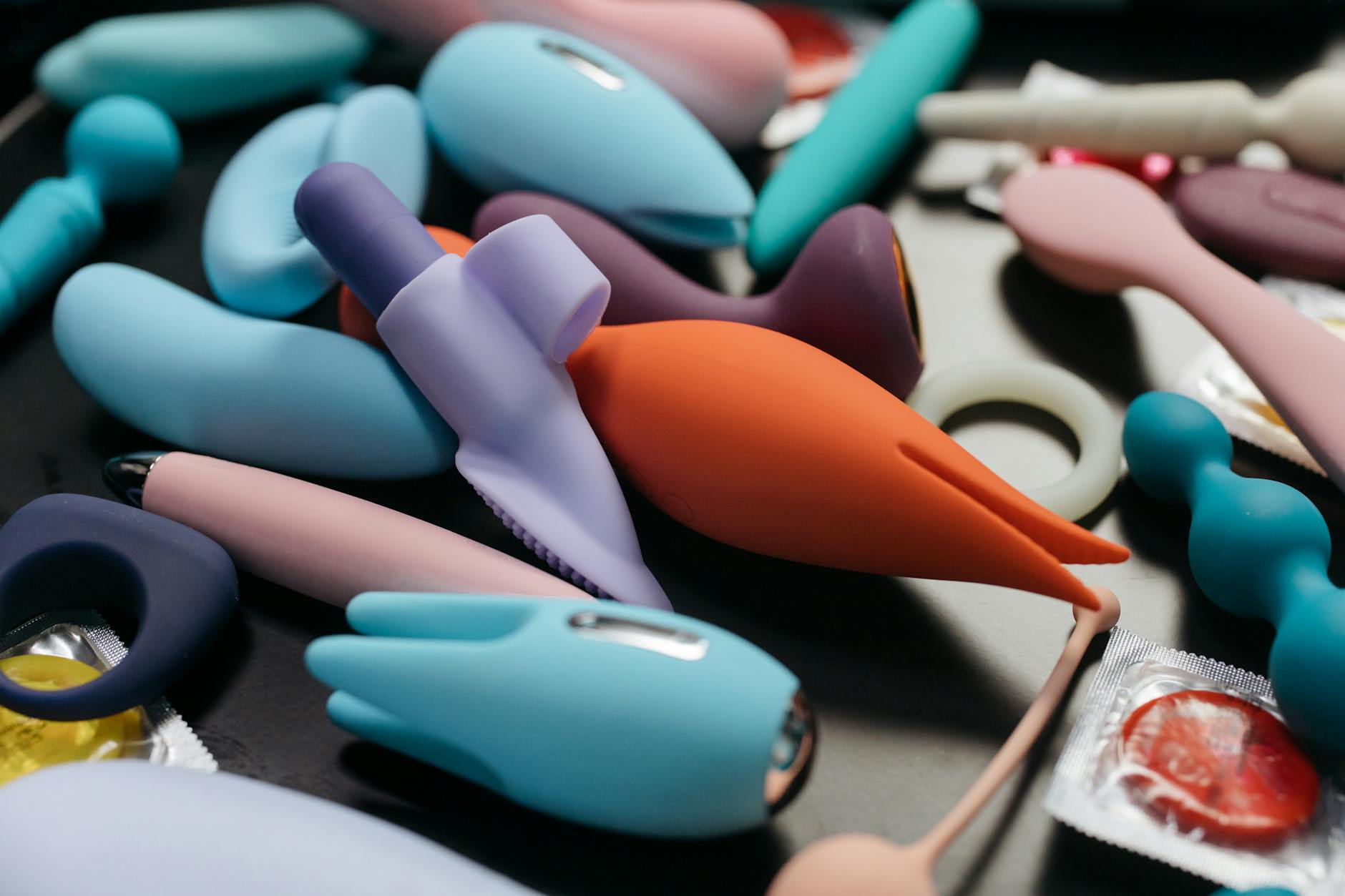
Let's name the thing nobody talks about
Antidepressants save lives. They also, for a lot of people, flatten sexual response in ways that feel like losing a part of yourself. You take the medication because depression was unbearable. Then your body stops registering pleasure the way it used to. And suddenly you're stuck between two bad options: quit the thing keeping you stable, or accept that sex becomes something that happens to your body but doesn't feel like much of anything.
Except there's a third option. And it involves rethinking what stimulation actually means.
What SSRIs do to arousal
Selective serotonin reuptake inhibitors (SSRIs) like sertraline, fluoxetine, and paroxetine work by increasing serotonin in your brain. That's great for mood regulation. The downside is that serotonin also suppresses dopamine in the pathways that drive sexual desire and response. About 40 to 60 percent of people on SSRIs experience some form of sexual side effect, whether that's delayed orgasm, reduced desire, or that specific numbness where stimulation registers but doesn't create any sensation or excitement.
That numbness is the tricky part. It's not that you can't have an orgasm. It's that the pathway between touch and pleasure gets muted. Your clitoris is being stimulated, but the signal isn't reaching your brain. It's like turning down the volume on the entire experience.
The conventional response from doctors is usually: "Try a different dose" or "Switch medications." Both are legitimate options. But they're not the only ones.
Why traditional vibration doesn't cut it when you're numb
A standard vibrator relies on consistent, rhythmic stimulation to build arousal over time. If your nervous system is already dampening sensation, a standard vibrator is like knocking on a door that's already muffled. You're adding more stimulation to a system that isn't translating stimulation into pleasure.
This is where lemon clitoral vibrators (also called suction vibrators or air-pulsation devices) change the game. They don't vibrate. They pulse. And that pulsing mechanism works differently on desensitized tissue.
Here's the practical difference. A vibrator sends waves of oscillation into tissue. A lemon sucker creates a rhythmic suction and release pattern. That suction engages a different set of nerve endings. It's not gentler or stronger. It's different. And for people whose sensation is muted by medication, "different" often means "finally registers."
The neurology of why suction works when vibration doesn't
Your clitoris has thousands of nerve endings, but not all of them respond to the same stimulus. Some are mechanoreceptors that respond to pressure and vibration. Others are more responsive to suction, which creates a broader pattern of stimulation across tissue.
When SSRIs suppress your dopamine response, they don't equally suppress all sensory pathways. Some stay more active than others. For many people, the nerve pathways that respond to suction are less affected by medication-induced numbing than the ones that respond to direct vibration.
Additionally, suction creates a unique sensation because it's not localized. A vibrator stimulates a specific point of contact. A lemon clitoral vibrator creates a seal and then pulls, which stimulates the entire clitoris, including the internal structure that extends up into your body. That broader engagement often translates to stronger signals reaching your brain, even when your dopamine response is suppressed.
How to actually use a lemon vibrator when you're on antidepressants
The standard instructions don't always work when you're dealing with medication-induced numbing. Here's what I see work in practice.
Start with no expectations. Seriously. The goal is not orgasm on day one. It's sensation. Put the lemon sucker on its lowest setting (patterns 1 or 2 on most devices like the Lem vibrator). Spend five minutes just noticing what you feel. Not judging it. Not comparing it to how you felt before medication. Just noticing.
Second, lengthen your warm-up dramatically. People on SSRIs often need 20 to 40 minutes of foreplay or solo exploration before the body even begins responding. That's not abnormal. That's how medication changes the timeline. Budget the time. Don't rush it.
Third, use a lemon vibrator alongside other stimulation. If you have a partner, they can touch you while you're using the device. If you're solo, try combining it with mental stimulation (erotica, audio, whatever works for you) or physical sensation elsewhere (a partner's hands, temperature play, whatever feels good). The suction device isn't meant to be the only stimulus. It's meant to be the anchor that creates the sensation you can build on.
Fourth, experiment with patterns and intensity methodically. Unlike traditional vibrators where higher intensity usually feels better, lemon suckers sometimes work backwards for medicated bodies. Pattern 3 might feel better than pattern 5. Lower intensity might create more sensation than the highest setting. Spend a week with one pattern. Then try another. Give your nervous system time to adapt.
The timeline for rebuilding sensation
This is important: you won't feel dramatically different after one use. Sensation takes time to come back, especially if you've been numb for years.
Week one. You'll probably feel some subtle response you haven't felt in a while. Maybe it's a small tingle. Maybe it's a faint sense of pleasure. It might feel weird or disappointing compared to what you remember. That's normal.
Week two to four. The sensation typically starts to intensify. Your nervous system is remembering how to respond. Your brain is starting to register the signals again. You might notice that your desire starts shifting. You might think about sex more, or initiate more often.
Month two to three. Orgasms sometimes start coming back. Not always as intense as they were pre-medication, but present and recognizable.
Month three plus. Pleasure deepens, though it often stays different from pre-medication baseline. And honestly, that difference isn't always worse. Many people I work with describe post-medication pleasure as less frantic and more grounded than it was before.
The timeline varies wildly depending on your specific medication, your dose, how long you've been on it, and your individual neurology. But the general shape is usually gradual reawakening rather than sudden change.
When to talk to your doctor about this
You don't need permission to use a toy. But you might want to mention to your psychiatrist or GP that you're experiencing sexual numbness and exploring ways to address it. Here's why.
First, some medications cause more sexual side effects than others. If you're on paroxetine (Paxil), switching to bupropion or mirtazapine sometimes helps without losing mood stability. Your doctor can't offer that option if they don't know you're struggling.
Second, sometimes adding a second medication (like buspirone or bupropion as an augmenter) can offset the sexual side effects while keeping your primary antidepressant working. It's worth asking about.
Third, if the numbness is paired with zero desire, that's different from numbness with intact desire. Zero desire sometimes points to a medication issue that needs addressing. Numbness with intact desire is more often something you can work around with tools like a lemon clitoral vibrator.
Your mental health comes first. Full stop. But that doesn't mean your sexual pleasure has to be the sacrifice you make to stay stable.
What makes lemon vibrators specifically useful for this
Compared to other tools, why lemon suckers specifically?
They're non-invasive. You don't have to insert anything. That matters when sensation is already muted, because insertion can sometimes feel uncomfortable or numb when external sensation is the goal.
They create a different stimulus pattern. As discussed, the suction mechanism engages nerve pathways that sometimes respond better to antidepressants than straight vibration does.
They're easy to control. Most have multiple patterns and intensity levels, which is crucial when you're in the discovery phase of figuring out what your medicated body responds to.
They feel modern and clinical rather than "sexy," which sometimes helps people who feel disconnected from sexuality. There's something grounding about using a tool that's clearly designed for this specific purpose.
Other things that help rebuild sensation alongside suction
A lemon vibrator is useful, but it's not a magic fix on its own. Pleasure is multidimensional.
Mindfulness helps. Specifically, learning to notice sensation without judgment. Many people on SSRIs intellectually know they should be feeling pleasure but then mentally shame themselves for not feeling it intensely enough. That shame dampens sensation further. Meditation, body scans, or simple grounding exercises (notice five things you see, four you hear, three you feel) often help people register pleasure more fully.
Exercise shifts dopamine and makes sensation come back. Even a 20-minute walk or some strength training can help rebuild the neural pathways medication is suppressing. Combined with suction play, it accelerates progress.
Physical intimacy without pressure. If you have a partner, touch that has zero expectation of leading to sex sometimes helps rebuild basic sensation. A hand on your thigh. A shoulder massage. Kissing. Nothing that requires performance. Just touch that reminds your nervous system what sensation feels like.
Time. This one is boring but it's real. Your nervous system is plastic. It adapts to medication over months. It also adapts back when you introduce new stimulus. That adaptation takes weeks or months, not days.
When lemon vibrators might not be the answer
If your sexual numbness is paired with complete loss of desire, and that loss started after you began medication, that's worth discussing with a doctor before investing time in tools. Sometimes the issue is motivation, not sensation. A tool can't rebuild desire that's pharmacologically suppressed. A medication adjustment can.
If you have pelvic pain that's medication-related (some SSRIs can trigger vulvodynia), a lemon vibrator might feel uncomfortable until you address the pain itself.
If your numbness is emotional rather than physical (you can orgasm but you don't feel connected to the experience), that's more about rebuilding emotional intimacy and less about the tool. That's something to explore with a therapist.
For most people though, sexual numbness from antidepressants is a sensation problem. And sensation problems have tools.
FAQ
Can I use a lemon sucker if I'm still having some sexual sensation?
Absolutely. You don't have to be completely numb for it to help. If antidepressants have reduced your sensation by 50 percent, a lemon vibrator can help you access the remaining sensation more fully. Many people also find that using one proactively (before numbness gets severe) helps prevent the sensation from flattening further.
Will a lemon clitoral vibrator work if I've been numb for years?
Yes, but with patience. The longer you've been numb, the longer rebuilding sensation usually takes. That said, the nervous system is plastic. Even after years of suppressed sensation, it can relearn how to respond. The process is slower than if the numbness is recent, but it's not impossible. Most people see meaningful change within two to four months of consistent use.
Should I tell my partner I'm using a vibrator to deal with antidepressant side effects?
If you have a partner and you're in a sexual relationship with them, yes. This isn't about shame. It's about practical communication. Your partner might worry that you're no longer attracted to them if they don't understand that medication is changing your sensation. Explaining it separately from the relationship dynamics makes it easier for both of you. Plus, partners can often help. They can provide touch, create a low-pressure environment, or just be aware that your timeline is longer.
Can I use a lemon vibrator alongside my antidepressant, or do I need to choose?
Use it alongside. You're not treating your depression with the vibrator. You're addressing a side effect. The goal is to keep taking your medication because your mental health matters, and use a tool that helps you access pleasure despite the medication's effects. They work in parallel, not in conflict.
How long until I can have orgasms again?
Varies. Some people experience orgasms return within weeks. Others take months. And some people find that orgasms come back gradually rather than suddenly. The important part is that sensation usually does come back, even if the timeline is slower than you'd like. If after four months of consistent use there's zero change, that's worth discussing with your doctor. Sometimes it's a medication issue that needs adjusting.
Is there a "best" lemon vibrator for antidepressant-induced numbness?
The best one is the one you'll actually use. That said, devices with multiple patterns and slower pulse options tend to work better for this specific situation than ones with only high-intensity vibration modes. The Lem vibrator, for instance, has a range of patterns that let you find what your medicated body responds to. But honestly, starting with what's accessible to you and adjusting from there is better than waiting for perfect equipment.
The bottom line
Antidepressants shouldn't cost you your sexuality. You shouldn't have to choose between mental health and pleasure. Lemon clitoral vibrators, combined with time and patience, help many people rebuild sensation and arousal after medication-induced numbness. The timeline is longer than you probably want it to be. The sensation might feel different than you remember. But for most people, it comes back.
Your body isn't broken. Your nervous system is adapting to a medication that's keeping you stable. You're not doing something wrong if pleasure feels distant. You're managing a side effect, and there are actual tools that help. Start where you are, give yourself time, and reach out to a professional if you need guidance. Your pleasure matters as much as your mental health.
If you're navigating this and want to explore more about how to rebuild intimacy during medication transitions, consider reaching out to discuss your specific situation. We're here to help.