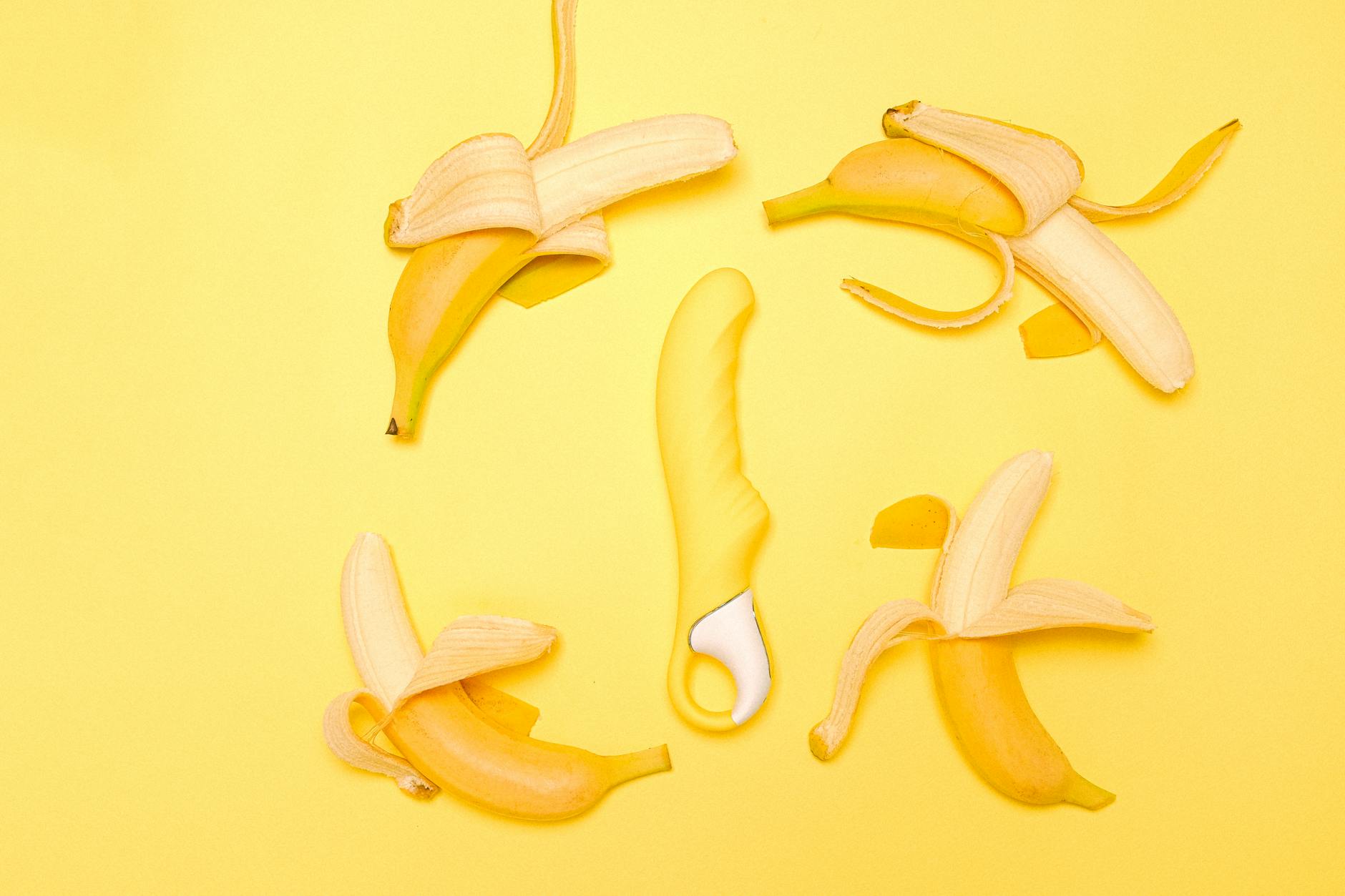
Let's talk about the overwhelm
You're thinking about trying a vibrator for the first time, and instead of feeling exciting, it feels like you're standing in front of a wall of choices you don't understand. Will it be too intense? Too big? What if you don't like it? What if your partner finds out? What if you orgasm and something breaks? The gap between curiosity and action is where most people get stuck.
Here's the thing: choosing your first lemon vibrator doesn't require you to figure out your entire sexual identity on day one. It requires three decisions. That's it.
Decision 1: What does "intensity" actually mean for your body
When people say a vibrator is "intense," they usually mean one of three things, and they're not all the same.
Pattern intensity is how strong the vibration frequency is. A toy running at 3000 vibrations per minute feels noticeably different than one at 7000. If you're new to vibrators, you don't need the highest number. You need the right number for you. Many people find that mid-range patterns (4000-6000) let you feel the sensation without becoming numb to it.
Contact intensity is about the surface area and pressure. A broad, flat surface spreads stimulation across more nerve endings. A pointed tip concentrates it in a smaller area. Neither is better. One might feel like relief, the other like information overload, depending on your sensitivity.
Suction intensity is specific to air-pulse devices like the Lem. Instead of vibration, suction creates a rhythmic squeezing sensation. For some people who've never felt this before, it's instantly more interesting than traditional vibration. For others, it's too novel and needs a slower introduction. Both are normal.
When you're choosing your first lemon clitoral vibrator, pick a pattern intensity that sounds sustainable, not maximal. You can always increase later. Your first toy should feel like "yes, this" not "oh god, dial it back."
Decision 2: Size and shape that fits your anatomy
This one gets mystified unnecessarily. Your first lemon vibrator doesn't need to be small. It needs to be the right shape for how you touch yourself.
Think about how you masturbate now. Do you use your finger and move it in circles? A straight up-and-down motion? Do you press flat against your clitoris? Do you prefer direct contact or do you like the hood staying in place while you stimulate around it? Your toy should match your existing rhythm, not force you into a new one.
The Lem, for example, is designed for people who like consistent contact and rhythmic suction. It's not small, but it's not large either. It's weighted so your hand doesn't fatigue. And because it uses suction instead of pure vibration, many first-time users find it feels more intuitive than a traditional vibrator with a pointy head.
If you tend toward lighter touch, a smaller vibrator or one with a thinner tip might sync better with how your body naturally responds. If you prefer broader pressure, a toy with a wider head or flat surface will feel less jarring.
Pro tip: size is genuinely not correlated with sensation. A small toy can deliver intense stimulation. A large toy can be gentle. Your comfort comes from shape and contact pattern matching your own touch, not from picking small so it feels less "serious."
Decision 3: What you actually want to feel
This is the decision most people skip, and it's the most important one.
Are you trying a toy because you want to explore faster orgasms? Because you're curious about a sensation you've never had? Because your partner expressed interest and you want to feel safe trying? Because you've heard that clitoral vibrators feel different than fingers and you want to know what different feels like? Because you're dealing with numbness and you need external help?
Your answer changes which toy makes sense. Someone looking to rebuild sensation after antidepressants might want a lemon sucker with multiple intensity levels to experiment with. Someone exploring with a partner for the first time might prioritize something that feels controllable and non-intimidating. Someone who's had good orgasms with their hands but wants to try something new might go for a toy that's different enough to feel like a real change but not so weird that it feels uncomfortable.
If you're not sure why you want to try a vibrator, that's fine. But spend five minutes thinking about it. "I'm curious" is a complete answer. So is "I want to feel something different." And so is "I think this might help me relax."
That clarity will tell you whether you need something gentle and exploratory or something with more clear sensation.
Unpacking the beginner anxiety
Most first-time toy anxiety clusters around three fears. Let's be direct about them.
Fear 1: It will be too intense and I'll hate it. Solution: start at pattern 1 or 2. You're not graduating to higher speeds. You're testing the water. If a toy feels overwhelming at low intensity, you'll know immediately and can adjust. If it feels good at low, you can try medium later.
Fear 2: I'll get addicted and won't be able to orgasm without it. This is the most common worry and also the least supported by evidence. Your body doesn't become dependent on external stimulation the way it might on a substance. What can happen is that you enjoy a toy and prefer it some days, which is fine. You can also use a toy some days and your hands other days. Your body is flexible.
Fear 3: My partner will judge me or feel threatened. This one deserves real conversation, not reassurance. If you're in a relationship and considering a toy, that's worth talking about before you buy. Not asking permission. Informing. "I've been thinking about trying a vibrator. This is for me, not instead of you. I wanted to tell you before I got one." That conversation either opens a door or clarifies something important about your relationship dynamic.
If you're single, none of this applies and you can skip straight to buying the toy that appeals to you.
Why lemon vibrators are genuinely good for first-timers
The design philosophy behind lemon clitoral vibrators is worth knowing. They're built for people who are new to toys or returning after a gap. That means shorter learning curves, intuitive controls, and a shape that doesn't require you to figure out some weird angle.
A lemon sucker like the Lem uses air-pulse technology instead of traditional vibration. This matters for beginners because it feels fundamentally different from what you might do with your fingers, so there's novelty, but it's not jarring. It also tends to feel less aggressive than vibration, which matters if you're sensitive or if you're rebuilding sensation after antidepressants or other numbing experiences.
If you're looking at a traditional lemon vibrator like the Berri or Uno, the benefits are similar: thoughtful design for ease of use, multiple intensity levels so you can match the toy to your mood rather than forcing your body to adapt, and enough variety that you're not locked into one pattern.
The practical logistics
Once you've made your three decisions, a few logistics matter.
Waterproofing. If you plan to use your toy in the shower or bath, you need full waterproofing, not just splash-resistance. Check the product page. Most Hello Nancy toys are waterproof, which is useful because water and lubrication eliminate friction issues you might encounter the first time.
Noise. Some vibrators are loud. Some are quiet. If you have roommates or a partner sleeping nearby, this matters. Read reviews for decibel information.
Charging vs. battery. USB-rechargeable toys are more convenient long-term. Single-use batteries are fine if you use a toy occasionally.
Material. Silicone toys are body-safe, easy to clean, and durable. That's the standard for Hello Nancy toys. You're not buying something that requires a PhD in material science.
For your first toy, you don't need to overthink these. You need them to not be deal-breakers. A toy that's quiet, rechargeable, waterproof, and made from silicone is a solid baseline.
Lubricant matters more than you think
Here's something nobody tells first-time users: the right lubricant can make the difference between "this is weird" and "oh, that's actually nice."
Water-based lubricant reduces friction and changes how the toy feels against your skin. If you're new to toys, using lube makes the experience smoother (literally) and less likely to trigger discomfort from friction or intensity. It also makes the toy easier to move, which matters if you're still figuring out what angle or pressure you like.
Get a small bottle of water-based lubricant. It's not an optional extra. It's part of the toolkit.
Start with solo exploration, not performance
Your first time using a toy should be alone, relaxed, with no expectation of outcome. Not because you need to be ashamed. But because the pressure to perform or come on schedule makes everything harder. You need space to explore without an audience, even a loving one.
Use it however many times you want before you involve a partner. Figure out what pressure feels good, what patterns you prefer, whether you like it more at the beginning of stimulation or the end. This is research. This is play. This isn't a test you're passing or failing.
When to reach out for help
If you buy a toy and after a few attempts it still feels uncomfortable or wrong, pause and think about what's off. Is the intensity too high? The angle weird? The material feeling strange? Most of these are solvable. You might just need a different toy. You might need more lube. You might need to start with even gentler intensity.
If pain appears, stop. Pain is information. That's worth talking to a gynecologist about, not powering through.
If numbness or deadness appears with a toy the same way it does with fingers, that might point to sensation issues worth discussing with a healthcare provider. A toy can't fix medical problems, though it can help you explore your body while addressing the underlying issue.
FAQ: Your actual first-time questions
Will my first vibrator hurt?
No. Vibrators don't cause pain if they're the right intensity for your body. If something hurts, turn it down or stop. Your job is to find the setting that feels good, not to endure the highest setting.
How long does it take to feel something with a lemon vibrator?
Anywhere from two minutes to two weeks. Some people feel an immediate shift. Others need a few sessions to relax enough to notice sensation. This is completely normal. Your first session might just be getting used to the physical sensation of holding a toy. That's still data.
Can I use a vibrator if I take antidepressants or birth control?
Yes. These medications can dampen sensation or make orgasms harder, but a vibrator works alongside them, not against them. Many people find that when antidepressants reduce sensation, a lemon clitoral vibrator helps them feel pleasure again. If you've read about rebuilding sensation, that's exactly what vibrators are useful for.
What if I buy one and hate it?
Then you know that toy isn't for you. It doesn't mean toys aren't for you. It means that particular shape, intensity, or pattern didn't match your body. The solution is trying a different one, not assuming toys aren't your thing. Most people find the right toy on attempt two or three, not attempt one.
Should I tell my partner I bought a toy?
If you live with them and you plan to use it regularly, yes. Not for permission. For honesty. If you live alone, it's your choice. If you're in a relationship and want to use it together, absolutely tell them. If you want to use it solo while partnered, that's also something to communicate about. You're not asking to be watched or validated. You're saying "this is part of how I explore my body" and giving them information.
Is there a "best" first vibrator for everyone?
No. The best first vibrator is the one that matches your anatomy, your sensitivity, and what you're curious about. For someone who wants a gentler introduction, a lemon sucker like the Lem might feel less intense than traditional vibration. For someone who wants immediate sensation change, a traditional lemon vibrator with multiple patterns might be the right start. Neither is wrong.
You don't need to be anyone but yourself
Buying your first vibrator doesn't mean you're joining a community, adopting an identity, or committing to anything. It means you're curious and you're giving yourself a tool to explore. That's enough.
The right toy is the one that makes you feel less anxious and more interested in your own pleasure. Start with that question and work backward. The logistics and features are just details.
If you have questions as you explore, you can reach out to Hello Nancy support or contact us here. We're here to help you figure this out, not to sell you anything you don't want.
Your first toy is just the beginning of getting to know what your body actually wants.