Let's be real about parenting and desire
Somewhere between the infant sleep schedule and the toddler meltdowns, between the endless laundry cycle and the "did you remember to sign the permission slip" conversations, you and your partner stopped having sex. Or you tried, but it felt obligatory. Or you wanted to, but by 9 p.m. you were already asleep on the couch.
This is not a failure. This is just parenting.
But here's what I see in my practice, constantly: once the early years soften (school, slightly more independence, a bedtime that doesn't require two adults), couples want to reconnect. The desire is still there. It's just been dormant. And the thing that surprises most partners is that reactivating pleasure doesn't require a fancy couples' retreat or hours of uninterrupted time. It requires permission, a realistic understanding of what's changed, and honestly, some better tools.
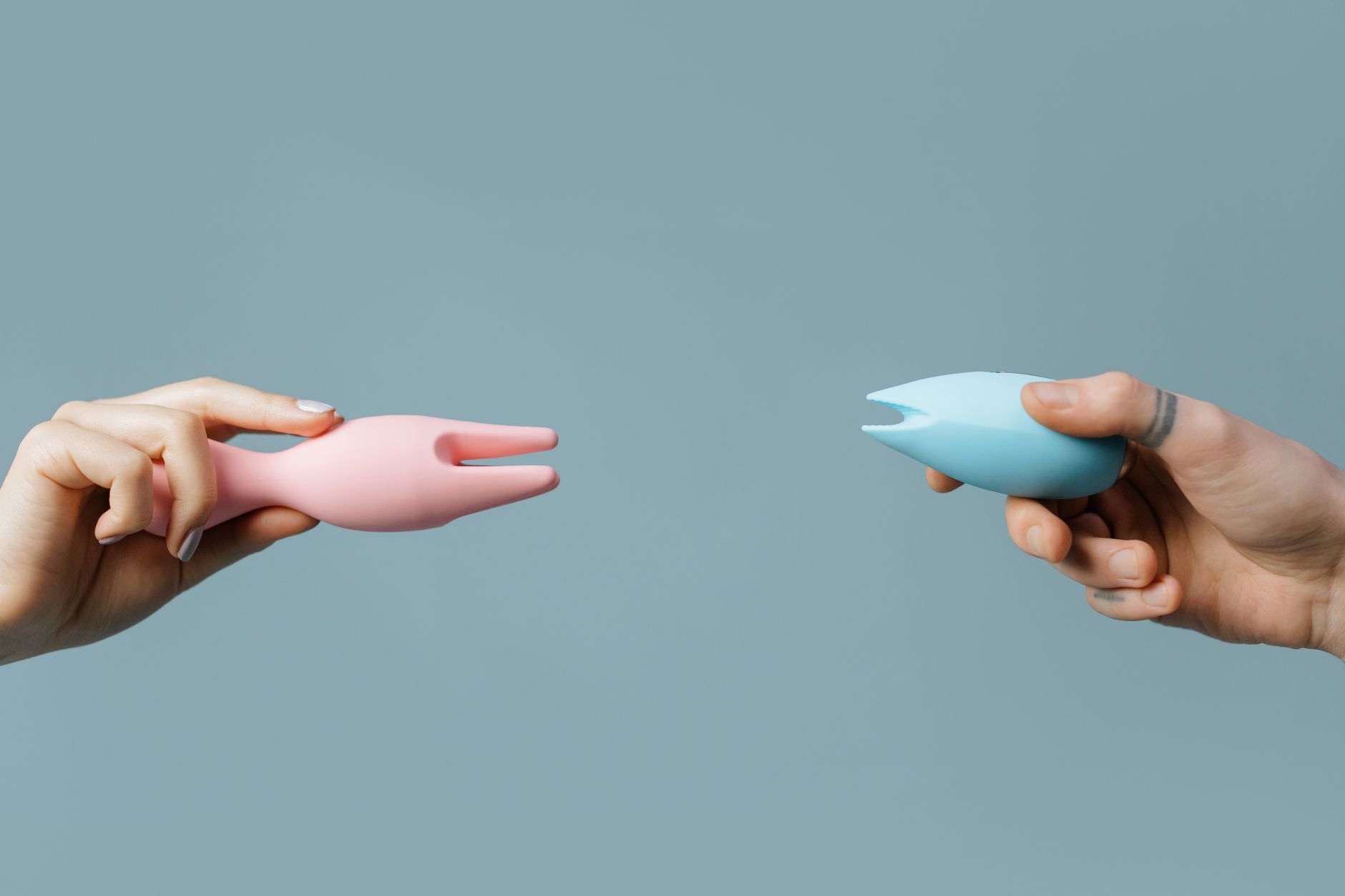
A lemon clitoral vibrator is one of those tools.
Why the early parenting years destroy your sex life
People often assume it's about attraction fading or resentment building. Sometimes those factors exist. But more often, it's purely physiological and logistical.
You're touched out. Your partner is asking for more when you've already given everything to a small human. Your body clock is inverted. Sleep deprivation murders arousal faster than almost anything else. There's no spontaneity because spontaneity requires a window of time, and for years there simply isn't one. And by the time both of you might theoretically be interested, one of you is already asleep.
Add to that: desire requires mental space. It's hard to fantasize or be present when you're running a logistics operation in your head.
The data backs this up. Couples with young children report the sharpest decline in sexual frequency and satisfaction of any life stage except serious illness or grief. It's not permanent, but it's real.
When desire starts coming back
Around the time kids hit school age or become more independent, something shifts. They're out of your bed. They can entertain themselves for thirty minutes without requiring CPR. You get a shower where you're not listening for crying. Your body remembers what pleasure feels like.
But here's where couples often stumble: they expect sex to resume exactly as it was before kids. Spontaneous, energetic, present. And then nothing happens, because life has still changed. You're older. Your energy distribution is different. Your schedule is structured around school pickups and sports practices. You're not the same people you were before parenthood.
That's not bad. It's just different.
The couples who rebuild intimacy successfully are the ones who acknowledge that and start again from a new baseline. Not the old way. A new way that fits who you actually are now.
How lemon vibrators actually help
Let me be specific about why a lemon clitoral vibrator like the Lem changes things when you're trying to rebuild intimacy as a couple.
First, it collapses the arousal timeline. Women's arousal takes time. Before kids, you had time to spare or didn't care if it took twenty minutes. Now you're hyper-aware of the clock. A lemon sucker gets you past the initial friction much faster. Not because you don't want foreplay, but because you can focus on foreplay that actually feels good without the pressure of "is this working yet." The air-suction mechanism is incredibly efficient at creating sensation. You're not grinding away hoping for the right angle and pressure.
Second, it softens the transition from parallel to connected. One partner can use the vibrator during partnered sex, which means you're both getting pleasure at the same time. You're not in the typical pattern of "this is for you" and "now this is for them." You're both engaged, both feeling good, both present.
Third, it removes the performance pressure from the receiving partner. After years of interrupted sex or infrequent sex, the pressure to "finish" or prove you still want it can be paralyzing. A lemon vibrator gives you a way to reach orgasm even if arousal is slow or if your nervous system is still half-tuned to listening for kids. No one's waiting. You're both invested.
Fourth, it acknowledges that your body might have changed too. Hormones shift. Sensitivity shifts. After years of not having regular sex, your body needs reawakening. A vibrator designed for clitoral pleasure, not penetration, bypasses all the "does it fit, does it feel good, am I doing this right" questions and just says: your pleasure matters and we're here for it.
How to actually start (the conversation before the tool)
This is the part couples skip and then wonder why the vibrator is still in the drawer.
You have to talk first. Not a deep, therapy-like conversation necessarily, but a real one.
"I miss being close to you" is a start.
"I know our sex life fell apart when the kids were small, and I want to rebuild it differently" is better.
"I'm interested in using tools that make this easier for both of us" is honest.
Most partners who've been absent from sex for years are worried that bringing this up will offend the other person or make them feel replaced or insufficient. That's understandable. But the opposite is true: a partner who says "I want us to use this together" is saying "I want you badly enough to solve the obstacles."
Start with that frame. Not "I need this to get off." But "I want us to rebuild pleasure together, and this might actually make it easier."
How to use a lemon vibrator together
Honestly, the mechanics are less important than the intention. But here's a practical flow:
Before you start. Charge it fully. Set a time when you're not exhausted, not rushed. This might mean a Saturday morning or even hiring a sitter for an hour. You're not trying to squeeze this into whatever gap exists. You're saying "this matters enough to protect the time."
During foreplay. One partner uses the lemon vibrator on the other during kissing and touching. This isn't a race. You're exploring what feels good. The receiving partner can guide: more pressure, lighter touch, different rhythm. Communication during this phase matters.
During partnered sex. The vibrator can be used externally during penetration if that's part of your sex life, or it can be the main event. Some couples find that the receiving partner using the vibrator on themselves while the other partner is inside (or outside) creates a rhythm that works for everyone. There's no right way, just what works for your bodies.
After. Touch each other. Don't roll over and go to sleep. This is the part that rebuilds intimacy, not just sex. You're remembering how to be close.
The mental shift that matters most
I work with couples who've had kids, and the biggest barrier isn't the mechanics of sex. It's permission.
Permission to prioritize your own pleasure. Permission to say "my orgasm matters." Permission to admit that desire didn't vanish, it just got quieter. Permission to use a tool instead of white-knuckling your way to climax or giving up.
Most of the couples I work with are successful not because they suddenly have more time (they don't), but because they stop treating sex like a low-priority task that happens if there's leftover energy. They treat it like connection.
A lemon clitoral vibrator is just a tool. But it's a tool that says: "your pleasure is worth this. Our connection is worth this. We're not waiting for the stars to align. We're making space for what matters."
That mindset shift is everything.
When you need more help
If one partner is interested in rebuilding intimacy and the other is completely checked out, a vibrator won't fix that. That's a conversation for a therapist. Desire discrepancy after kids is real, and it sometimes points to deeper disconnection or resentment that needs actual work.
But if both of you want to reconnect and just don't know where to start, a tool like the Lem can collapse the obstacles. It gives you a concrete thing to do together. It removes the pressure. It creates space for pleasure to exist again.
That's often the kindling you need to rebuild.
FAQs
Q: Will using a vibrator make my partner feel like they're not enough? A: Only if you frame it that way. Frame it as "I want us to have more pleasure together" instead of "you're not getting me there." Most partners actually appreciate the tool because it means less pressure on them to be the sole source of arousal and orgasm.
Q: How long does it actually take to rebuild a sex life after kids? A: That varies wildly. Some couples reconnect within weeks of making space for it. Others need a few months of consistency before desire really comes back. The key is that it builds gradually. You're not trying to return to pre-kid frequency overnight.
Q: Is it weird to use a vibrator when my partner is there? A: Uncomfortable at first? Maybe. Weird? No. Millions of couples use vibrators together. It's genuinely common, and most people who try it find it makes sex better and closer, not more distant.
Q: What if I'm the partner with lower desire right now? A: You don't have to want it as much as your partner does. But you can agree to explore together. Sometimes desire comes back when you're actually having sex. It's not always the other way around. Permission to ease in, to say no sometimes, and to use tools that make pleasure easier can actually help your desire reconnect.
Q: Will this replace emotional intimacy? A: No. A tool makes physical reconnection easier. But emotional intimacy is built through conversation, vulnerability, and prioritizing each other. The vibrator handles the physical part. You handle the rest.
Q: How do I know if we're just going through the motions or actually rebuilding? A: Genuine rebuilding feels like increased affection outside of sex, more communication, less resentment, and actual pleasure during sex (not just relief that it happened). If you're using the vibrator but still feeling distant, that's worth talking about or bringing to therapy.
You can come back from this
Parenting doesn't end your sex life. It interrupts it. And interruptions can become permanent if you don't intentionally reconnect.
You don't need a vacation or perfect conditions. You need permission, realistic expectations, and tools that work with where you actually are right now. A lemon vibrator is one of those tools.
If you want to explore more about rebuilding intimacy after life transitions, read about how to use a lemon vibrator when desire fades in a long-term relationship for deeper conversation strategies. And if you're also dealing with the physical changes of midlife, how to use a lemon vibrator for better sensation during menopause covers that shift specifically.
Your desire didn't die. It's just been sleeping. It's time to wake it up.