The thing nobody tells you about menopause and sensation
Let's be real: menopause changes how you feel pleasure. Tissue gets thinner, lubrication shifts, arousal takes longer to build. But here's what the wellness industry won't say clearly. Your capacity for intense, satisfying orgasms doesn't disappear. It just requires a different approach.
I work with couples navigating this transition all the time. The most common pattern I see? People assume their best sexual years are behind them. Then they discover a tool like a lemon clitoral vibrator, and suddenly they're experiencing sensation they didn't know was possible. This isn't a polite lie to make menopausal women feel better. It's a consistent clinical observation.
The reason lemon vibrators work so well during and after menopause comes down to physiology, smart design, and a shift in how you think about your own pleasure.
What menopause actually does to sensation
Estrogen controls more than you think. It maintains tissue thickness in the vulva, keeps blood flow responsive, and supports nerve sensitivity. When estrogen drops, that tissue becomes thinner and more delicate. Blood flow takes longer to respond to arousal. The clitoris, which has about 8,000 nerve endings, becomes less immediately reactive.
But here's the critical part: the nerves don't disappear. The brain's capacity for pleasure doesn't diminish. What changes is how stimulation needs to happen.
A lemon vibrator works because it uses gentle suction and pulsation rather than direct pressure. This matters enormously post-menopause. Direct friction on thinner tissue can feel uncomfortable or even painful, which shuts down the whole experience. Suction, by contrast, stimulates those nerve endings without aggressive pressure. It's like the difference between tapping someone's shoulder versus grabbing it. The sensation reaches the same place, but one feels inviting and one feels jarring.
Why clitoral vibrators beat other toys after menopause
After menopause, your clitoris becomes even more central to pleasure than it was before. Penetration often feels less satisfying because the vaginal tissue is thinner and less elastic. The clitoris, though, responds beautifully to the right kind of stimulation.
A lemon clitoral vibrator gives you that stimulation without requiring you to generate it yourself. You're not gripping or tensing anything. You're just receiving sensation. For bodies that have spent decades managing pleasure around someone else's rhythm, this shift is often liberating.
The design of a quality lemon vibrator also matters. The shape should fit your anatomy comfortably. You should be able to control intensity easily. And importantly, you shouldn't feel pressured to use the highest setting. Many people post-menopause find that patterns 2 or 3 on a vibrator create more satisfying orgasms than full intensity ever did. That feels counterintuitive until you experience it.
The physical setup that helps
Three things make a real difference when using any clitoral vibrator post-menopause.
Lubrication is non-negotiable. Water-based lube isn't a sign that something's wrong with you. It's a tool. Use it generously. Your body isn't broken because it needs it. Your tissue is simply responding naturally to hormonal shifts. A good water-based lube means you're not working against friction, which lets sensation come through clearly.
Warm up longer than you used to. If you spent 30 years having sex where foreplay took 10 minutes, that's not your baseline anymore. Post-menopausal arousal builds more slowly. Budget 15-20 minutes of touch and thought before you even pick up a vibrator. This isn't wasted time. It's how your nervous system signals readiness. When you finally use your lemon vibrator, you'll get there faster because your body has actually prepared.
Start low and increase gradually. A lemon clitoral vibrator typically has multiple intensity levels. Start at pattern 1 or 2. Stay there for several minutes. Let sensation build. You'll often find that lower intensities create more complex, nuanced orgasms than the hardcore settings. Your nerve endings are exquisitely sensitive. Honor that.
The emotional piece that changes everything
Here's something I see constantly in my practice: menopause coincides with other life shifts. Kids move out. Long-term relationships hit snags. Work stress peaks. Grief surfaces. The temptation is to blame your body for changes in pleasure that actually come from emotional distance.
If you're in a partnership, this matters enormously. "My body is responding differently" is not the same as "I want us to reconnect." If you conflate the two, you end up solving the wrong problem.
When you use a lemon vibrator solo, you get clarity. You discover what your actual physical capacity is, separate from relationship dynamics. That's powerful information. If you find that solo pleasure feels rich and available, but partnered sex feels flat, you've just identified the real issue. It's not menopause. It's disconnection.
Conversely, if you discover that your body responds beautifully to a lemon clitoral vibrator, you now know what good sensation feels like. You can communicate that to a partner. You can say, "This is what works for me now," rather than suffering through sex that feels obligatory.
When things feel stuck, even with tools
If you're using a lemon vibrator consistently and orgasms still feel distant or impossible, that's worth investigating. Genitourinary syndrome of menopause (GSM) is real. Sometimes the tissue thinning goes beyond what lube and patience can address. A menopause-trained gynecologist can prescribe topical estrogen creams that have minimal systemic absorption and transform sensation in weeks.
If desire itself has vanished, not just orgasm, that's also solvable. Testosterone therapy is worth discussing with a provider, though it's prescribed conservatively in some regions. For the right person, it's life-changing.
The point: if something feels wrong, don't just accept it. Menopause is not a time to give up on pleasure. It's a time to get better tools and better information.
Integrating a lemon vibrator into your actual life
Let's talk practically. If you're partnered, does your partner need to be involved? Not necessarily. You might want to explore solo first, get comfortable with sensation, then decide how or whether to bring a toy into partnered sex. You might use a lemon vibrator only solo. You might integrate it as foreplay. You might use it during partnered sex. These aren't one-size-fits-all decisions.
When you first use a lemon clitoral vibrator post-menopause, expect that your body might respond differently than toys did when you were younger. You might need more time to get there. You might come faster than expected. You might find that you prefer one intensity level forever. Your pleasure isn't a fixed destination anymore. It's something that evolves with your body.
One more thing: noise sensitivity often changes post-menopause too. Many people become more self-conscious about sound, especially if they're still partnered. A lemon vibrator is quieter than many options, which matters if discretion is important to you. Some models are designed specifically for silence. Know what you're getting into before you buy.
The conversation with your partner, if you have one
If you're in a long-term relationship and considering introducing a lemon vibrator into your shared sex life, frame it accurately. This isn't "my body is broken, we need help." This is "I've discovered something that works really well for me, and I want to explore it together." That distinction changes everything. One feels like a deficit. The other feels like discovery.
Your partner might feel threatened. That's worth addressing directly, not by hiding the vibrator. A secure partner gets that your pleasure is separate from their performance. A vibrator isn't replacing them. It's expanding what's possible.
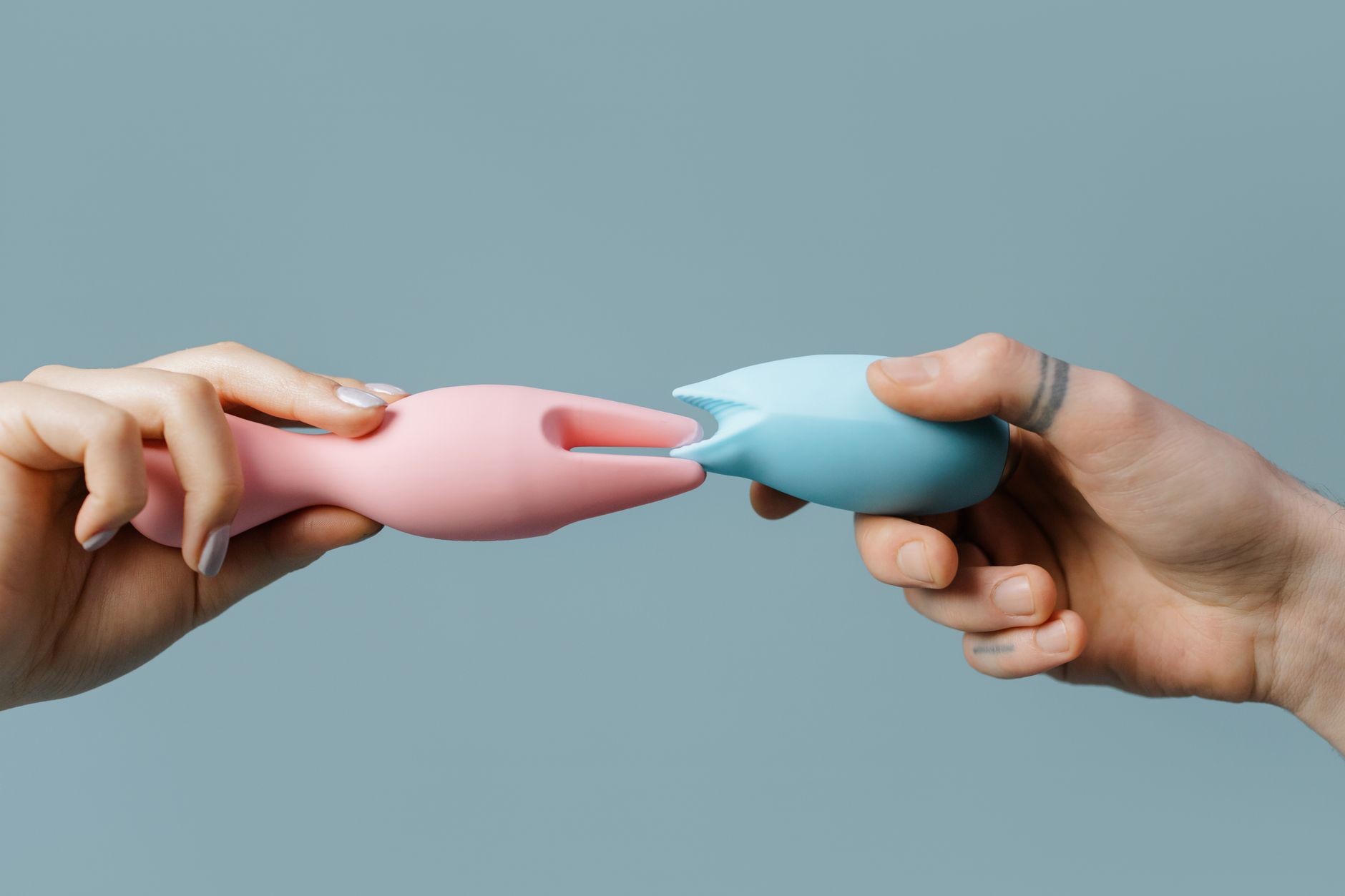
Photo by cottonbro studio on Pexels
FAQ: Your questions about lemon vibrators and post-menopausal pleasure
Can a lemon vibrator actually help if I have vaginal dryness from menopause?
Yes, but with nuance. A lemon clitoral vibrator doesn't address dryness directly. Lube does that. But a lemon vibrator combined with lube makes the experience feel natural and pleasurable instead of uncomfortable. The vibration brings blood flow to the tissue, and the suction-based stimulation (rather than friction) means you're not fighting against dryness. Many people find that consistent use actually improves natural lubrication over time, though this varies.
How long does it take to feel sensation after starting to use a lemon vibrator post-menopause?
That depends on your starting point. If you've had no sensation for months, some people feel the difference within the first few uses. Others take weeks. Consistency matters more than frequency. Using it 2-3 times a week for a month gives your nervous system time to recalibrate and respond. Don't judge based on the first experience.
Is it normal that I need a lemon vibrator now when I never did before?
Completely normal. Your body changed. The tools that worked at 35 don't necessarily work at 55. This isn't weakness or dysfunction. It's adaptation. Getting a lemon clitoral vibrator is the same as getting reading glasses. Your eyes changed. You got better tools. Your pleasure capacity didn't decrease. It just requires a different approach.
Should I hide a lemon vibrator from my partner?
That depends on your relationship. If you're hiding it because you're ashamed, that's worth examining. If you're hiding it because you want privacy, that's fine. But hiding it because you're afraid your partner will judge you or feel threatened often means the real conversation isn't happening. You might be surprised by how your partner responds to honesty. And if you're not, that's important information about your relationship.
Can I use a lemon vibrator if I'm on hormone replacement therapy (HRT)?
Absolutely. HRT can improve sensation and lubrication, which might make a lemon vibrator feel different than it would without HRT. You might need less lube. Sensation might build faster. But the basic principle is the same. You're using a tool designed for post-menopausal bodies, whether you're on HRT or not.
What if a lemon vibrator doesn't work for me?
First, give it time. Second, make sure you're using enough lube and taking time to warm up. Third, try different intensity levels and patterns. Fourth, make sure you're relaxed and not in performance mode. But yes, sometimes a particular toy just doesn't click with your body. That's not a failure. It means you need to find what does work. Sometimes it's a different vibrator. Sometimes it's a different approach entirely.
What changes post-menopause, and what stays the same
Honestly though: menopause is not the end of your sexual life. It's often the beginning of the best chapter. You have decades of experience with your own body. You know what you want. You're less likely to perform for someone else's benefit. You have time and mental space that you didn't have before.
The tissue might be thinner. The arousal might be slower. The lubrication might need help. But your capacity for pleasure, your nerve sensitivity, your ability to have intense, satisfying orgasms? That's still there. A lemon vibrator, the right information, and permission to explore on your own terms? That's often what helps you find it.
If you're navigating this transition and feeling lost, you're not alone. Reach out if you want to talk through what's happening in your body and your relationship. That's what I'm here for.