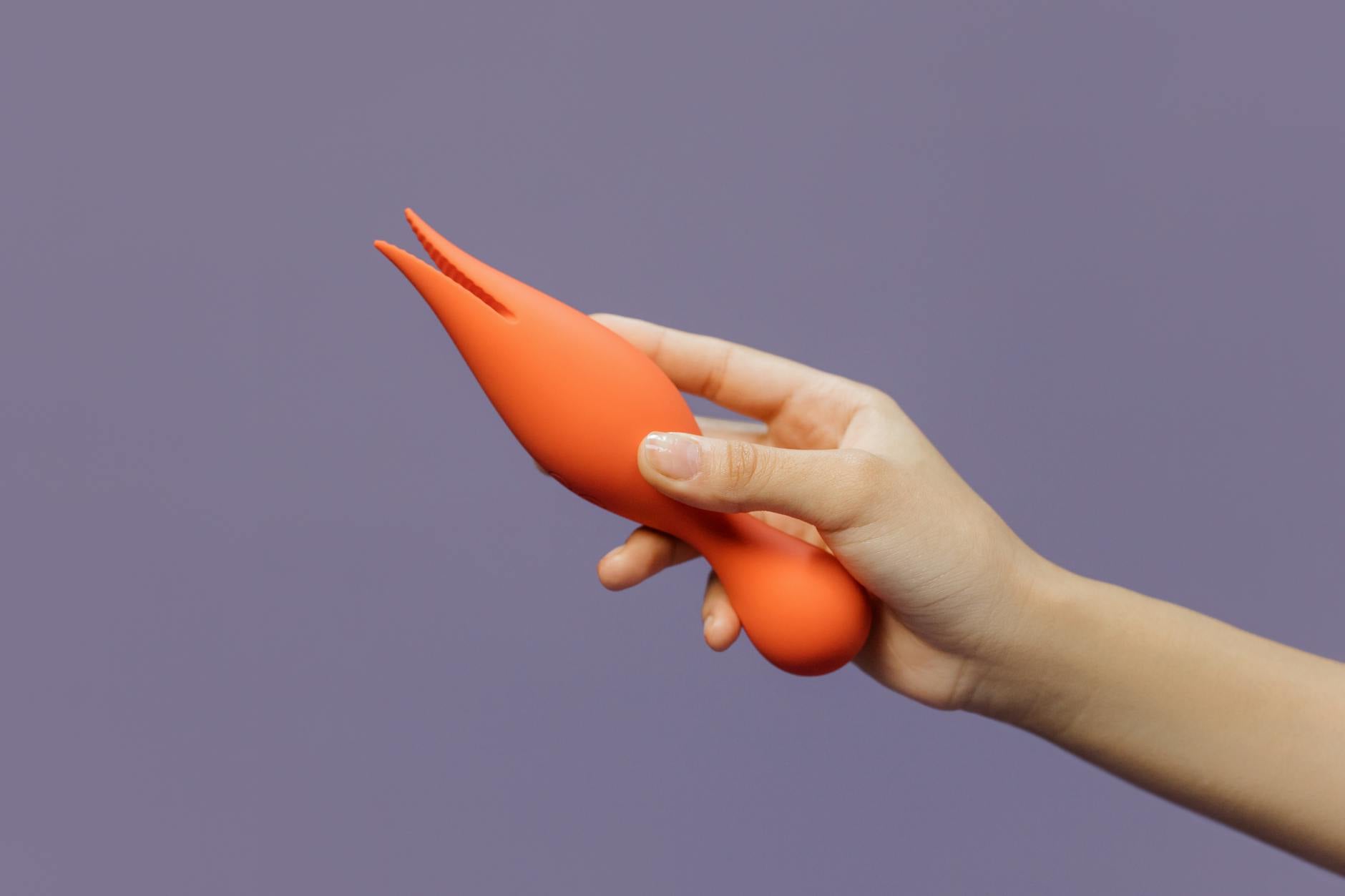
How to Use a Lemon Vibrator When Antidepressants Reduce Sensation
Here's the conversation nobody's having: your antidepressant is working brilliantly at its job. You feel less anxious, more present, maybe for the first time in years. And your sex drive has gone dormant.
This is not a personal failure. It's not a sign you picked the wrong medication. It's a well-documented side effect that affects somewhere between 40% and 60% of people taking SSRIs or SNRIs, depending on which study you read. The mechanism is real. Serotonin doesn't just lift your mood. It also dampens the signal chain that triggers arousal and orgasm. Your brain is literally operating on different wiring.
The good news: you don't have to choose between mental health and pleasure. A lemon vibrator, specifically, can rewire how sensation travels through your body when antidepressants have muffled the usual pathways.
Why antidepressants mess with sensation in the first place
Most antidepressants work by increasing serotonin availability in your brain. That's fantastic for anxiety and depression. It's less great for the delicate chemical timing that creates arousal. Here's why: the system that produces dopamine and norepinephrine—the chemicals that drive desire and sexual response—gets outcompeted by all that extra serotonin floating around.
Think of it like this. You have five lanes on a highway. Serotonin starts using four of them. Dopamine and norepinephrine are stuck in one lane, crawling. Your brain's still functional. Your body just can't generate the urgency it used to.
On top of that, antidepressants can slightly reduce blood flow to the genitals during arousal. Your clitoris swells less dramatically. Lubrication takes longer to arrive. Orgasm, when it happens, might feel muted or distant. For some people it disappears entirely.
None of this is permanent. And none of it means you're broken.
Why lemon vibrators work differently than other toys
Most vibrators deliver surface-level stimulation. They buzz. Your numbed nerve endings have to work hard to register that buzzing as pleasure. By the time a signal reaches your brain, it's faint.
Lemon clitoral vibrators, specifically, use air-suction technology instead of traditional vibration. That suction creates a pressure wave that travels deeper into the tissue, bypassing the slightly desensitized surface layer and hitting the nerve clusters that antidepressants have muffled less severely. It's not about working harder. It's about working smarter.
Most people on SSRIs report that suction toys feel more effective than standard vibrators. The sensation is less subtle. It's harder to ignore. It meets your brain halfway.
Start slow and track your response
When you're on antidepressants, your body's arousal ramp is different. It might take 20 to 40 minutes to feel anything. That's not a bug. That's the new normal, and fighting it exhausts you.
Set aside a full hour for your first session. No pressure to orgasm. The goal is sensation mapping: figuring out which lemon vibrator settings actually register for you.
Begin on the lowest setting. Most lemon vibrators offer 3 to 5 intensity levels. Spend 5 minutes on each one, paying attention to what you notice. Tingling. Warmth. A vague sense of pressure. Even if it's mild, note it. Your brain is learning to recognize these signals again.
If you feel nothing after 10 minutes on a setting, move up. There's no prize for toughing it out. The whole point is to find the threshold where your body actually registers the stimulation.
Build stamina before chasing orgasm
One of the cruelest parts of antidepressant-related sensation loss is the orgasm delay. Even if you do achieve arousal, climax might take 45 minutes or longer. For many people, that feels impossible to sustain.
Instead of treating orgasm as the finish line, treat sensation as the goal. Spend three to five sessions just getting comfortable with the feeling of the lemon vibrator on your body. Let your nervous system remember what stimulation feels like. No pressure to arrive anywhere.
After a week or two of regular use, your brain starts re-sensitizing. The muffling doesn't disappear—your medication is still doing its job at the neurotransmitter level. But your central nervous system learns to amplify whatever signal does get through. It's like turning up the volume on a quiet song.
Many people find that regular stimulation without pressure to climax actually improves orgasm capacity over time. Your body remembers the pathway.
Use lube intentionally
Antidepressants can reduce natural lubrication, especially if you're on an SNRI like venlafaxine. That's not just uncomfortable. It makes it harder for the lemon vibrator to create the suction effect it's designed for.
Use a water-based lubricant generously. Reapply halfway through your session if needed. This isn't failure or extra friction. It's removing one obstacle so you can focus on what you're actually feeling.
The lubricant also makes longer sessions more comfortable. If you're spending 30 to 60 minutes with a vibrator, friction adds up. Better to plan for comfort from the start.
Consider timing within your medication cycle
Your antidepressant dose matters. Sensation typically feels slightly better in the morning if you take your medication at night, because the concentration in your bloodstream has peaked and started to level off. It's not a huge window, but if you're struggling to feel anything, timing your solo sessions a few hours after your usual morning routine might help.
Don't skip doses or adjust timing to chase pleasure. That's not worth the risk to your mental health. But if you notice sensation is consistently better at certain times of day, work with that rhythm.
Have a conversation with your prescriber
If antidepressant-related sensation loss is significantly affecting your quality of life, tell your doctor. This is not a trivial side effect. You have options.
Some people switch to a different class of antidepressant. Bupropion, for instance, often has less impact on sexual sensation because it works primarily on dopamine rather than serotonin. Others add a supplementary medication designed to counteract sexual side effects. A few work with their provider to adjust the dose or timing.
You don't have to live with flattened pleasure as the price of mental health. The right medication combination is possible. It might take a few tries to find it.
In the meantime, a lemon clitoral vibrator bridges the gap. It gives your body a fighting chance to experience sensation while you're working with your provider on the medication side.
Be patient with yourself
Reclaiming sensation when you're on antidepressants is slower than it would be otherwise. That's the reality. You're essentially retraining your nervous system to respond to stimulation when your brain chemistry is actively blunting those signals.
This doesn't mean it's not worth doing. Regular sensation work with a lemon vibrator actually helps your body learn to amplify whatever signal does get through. Over weeks or months, many people find their capacity for pleasure returns, even on the same medication dose.
Your mental health is not negotiable. Your pleasure matters too. They're not in conflict. They just need the right tools.
FAQ: Antidepressants and sensation recovery
How long does it take to regain sensation after starting an antidepressant?
Sensation loss typically sets in within 1 to 2 weeks of starting a new antidepressant. Regaining sensitivity is slower. Some people see improvement within 3 to 4 weeks of intentional stimulation work with a lemon vibrator. Others take 2 to 3 months. It depends on the medication, your brain chemistry, and how consistently you engage with sensation. Consistency matters more than intensity.
Can I use a lemon vibrator with every antidepressant, or are some worse than others?
Sensation loss happens across most SSRIs and SNRIs, but severity varies. Sertraline and paroxetine tend to have more sexual side effects than some others. Bupropion and mirtazapine typically have fewer. That said, a lemon clitoral vibrator can help regardless of which medication you're on. The technology adapts to your level of sensation loss. Talk to your prescriber about which drugs might work best for you if sexual side effects are a major concern.
Is it normal that I feel nothing even on the highest setting of my lemon vibrator?
Yes, especially in the first few weeks or if you're on a higher dose of your antidepressant. Your desensitization might be severe enough that even air-suction technology needs time to reach you. Keep showing up consistently. Your nervous system will learn. If you've been using it regularly for 4 to 6 weeks and feel absolutely nothing, that's worth mentioning to your prescriber. There might be a medication adjustment worth exploring.
Can I combine a lemon vibrator with other stimulation to regain sensation faster?
Absolutely. Mental stimulation—fantasy, erotica, partner involvement—actually helps your brain route around the serotonin blockade. Some people find that using a lemon vibrator while reading or listening to something arousing helps sensation return faster than solo use alone. Others do better with partnered sessions where they're receiving additional touch or attention. There's no one formula. Experiment and notice what helps your body respond.
What if my partner doesn't understand why I need a toy now when I didn't before?
This is about neurobiology, not desire. Your medication didn't change your attraction to your partner. It changed how your nervous system processes stimulation. A lemon vibrator isn't a replacement for your partner. It's a tool that helps your body receive and register pleasure, which then becomes available in partnered sex too. Having an honest conversation about this distinction matters. You're not saying your partner isn't enough. You're saying your nervous system needs external help to bridge the gap your medication created.
Should I stop taking my antidepressant if the sexual side effects are too severe?
No. Don't stop without your prescriber's guidance. Abruptly stopping an antidepressant can cause withdrawal effects and a serious return of depression or anxiety symptoms. Talk to your doctor about the side effects you're experiencing. There are real solutions: switching medications, adjusting dose, adding another medication to counteract sexual effects, or using tools like a lemon vibrator to restore sensation. Your mental health and your pleasure both matter. You don't have to sacrifice one for the other.
Reclaim your body
Antidepressants gave you your life back. Your nervous system is still learning to live in a body with a different baseline. A lemon vibrator meets you in that transition. It's not cheating or artificial. It's support for your body while your brain chemistry is adjusting to its new normal.
If you're struggling with sensation loss and your medication is otherwise working well, try consistent use of a lemon clitoral vibrator. Set expectations that this is a 4 to 12 week recalibration, not a quick fix. Show up regularly. Be patient. Your capacity for pleasure is still there. It just needs the right signal to wake up.
If you have questions about how to get started or need guidance tailored to your situation, reach out to us. We're here to help you navigate this.