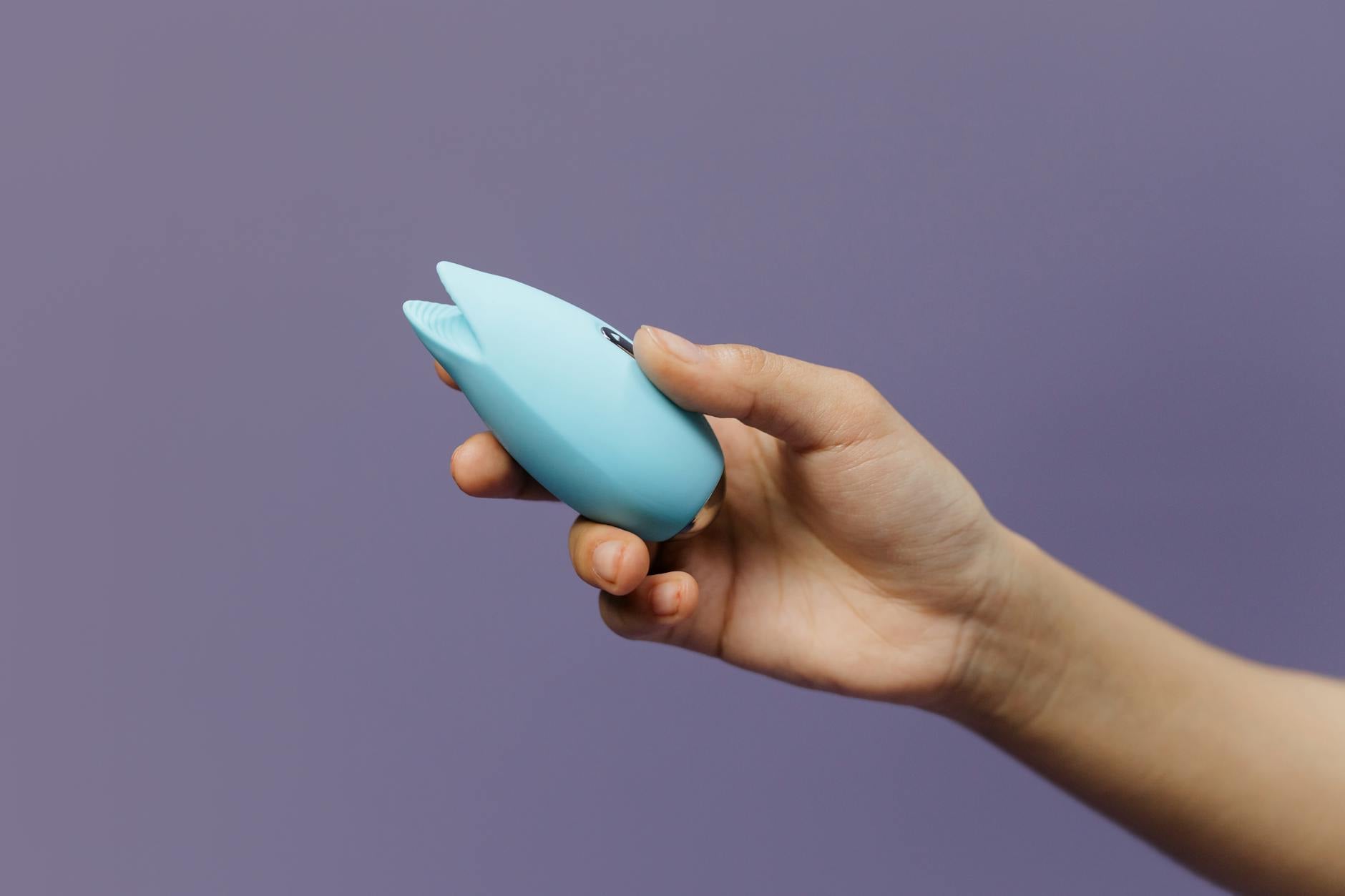
Let's be real about birth control and desire
You switched birth control and suddenly orgasms feel harder to reach. Or maybe you just started, and desire has basically flatlined. You're not imagining it. Hormonal birth control—whether it's the pill, the patch, the implant, or the ring—changes how your brain and body respond to pleasure. This isn't a sign that something's wrong with you. It's biochemistry.
The tricky part: most prescribers don't explain this. So you end up thinking you've lost your sex drive when really your brain just needs a new roadmap for arousal. And that's where tools like a lemon vibrator come in. They're not a workaround for broken desire. They're a language your body understands when the usual script stops working.
Here's what actually happens, and what to do about it.
How hormonal birth control rewires arousal
Hormonal contraceptives work by suppressing the hormones that drive ovulation. That means less estrogen, less testosterone, and sometimes a different balance of progestin depending on which method you're using. Testosterone is huge for desire in everyone, regardless of anatomy. It's not just about penetration or intensity. It's the baseline signal in your brain that says "sex would feel good right now."
When birth control tanks testosterone, that signal gets quieter. Your brain still works. Your nerve endings still work. But the chemical invitation to arousal becomes harder to hear.
Then there's sensation itself. Estrogen influences how responsive your nerve endings are. Lower estrogen can mean less sensitivity, which means touch that used to feel electric now feels muffled. And because arousal is partly physical and partly psychological, that muffling creates a feedback loop: you feel less sensation, so you engage less with the experience, so arousal never really builds.
The timeline nobody tells you about
Your body doesn't adjust to birth control overnight. For some people, the shift in desire or sensation happens within weeks. For others, it takes three months to settle. And sometimes the adjustment never happens, which is when switching methods becomes necessary.
The worst part: most conversations about birth control side effects focus on mood, headaches, nausea. Nobody sits down and says, "Your libido might vanish for six weeks, and that's normal." So you panic. You assume you're depressed or your relationship is dying when really your neurochemistry is just in transition.
Letting yourself feel neutral or frustrated about this is fair. It's also temporary, usually.
Why a lemon clitoral vibrator matters right now
When arousal feels slow or distant, you need a tool that doesn't ask your body to do the work. A lemon vibrator—specifically the kind that uses air-suction stimulation instead of simple vibration—works because it creates sensation without requiring a long buildup.
Here's the difference: traditional vibrators rely on your nerve endings detecting vibrations. That's a subtle signal your brain has to recognize and interpret. Air-suction clitoral vibrators create a pulse of suction that's unmistakable. Your nerve endings can't miss it. So even when your body is quiet, even when testosterone is low, the sensation registers.
This is huge when your arousal is dampened by hormones. You're not trying to manufacture desire from nothing. You're giving your body a clear signal that feels good, and letting that signal build naturally.
Practical steps: starting over with sensation
First, accept the adjustment period. You're not broken. Your body switched pharmaceutical profiles. Give yourself three months before deciding this method doesn't work for you.
Second, stop expecting the old script. If you used to get aroused in five minutes, you might now need fifteen. That's not a loss. It's just a different rhythm. Most of my clients find that once they accept the longer timeline, the quality of arousal actually improves because they're not rushing.
Third, use a lemon clitoral vibrator as part of exploration, not rescue. Set aside time when you're not tired, when you have space to yourself. Start at the lowest setting. Let the sensation build without pressure to orgasm. Sometimes that removes the performance anxiety that locks down arousal further.
Fourth, talk to your partner (if applicable) about what's changing. "My body is adjusting to new medication" is a conversation about logistics. "I want us to explore together while I figure this out" is a conversation about connection. The second one changes everything.
When to suspect it's the birth control, not you
Lowered desire that started right after you switched methods, or within a month of starting a new one, is almost always hormonal. If desire dropped suddenly and you've been on the same birth control for two years, that's probably something else (stress, relationship shift, depression) and worth exploring separately.
Sensation changes are trickier. Reduced clitoral sensitivity can happen with hormonal birth control, but it can also be numbness from overuse of vibrators, or from pelvic floor tension. If you're experiencing true numbness (like you can't feel touch at all), a break from vibrators plus some gentle pelvic floor stretching often helps more than powering through with a stronger toy.
The method matters: which birth control affects arousal most
Generalizations here: progestin-only methods (the mini-pill, the shot, the implant) tend to suppress testosterone less than combined oral contraceptives do. The copper IUD doesn't change hormones at all, which is why some people switch to it specifically for libido reasons. If you're six months into a method and your arousal is still in the basement, mention this to your prescriber. Sometimes a different formulation or a different method entirely makes a real difference.
But also: the method that's right for you might not be the one that keeps your libido highest. Contraception is also about preventing pregnancy, managing other health stuff, and fitting your life. You don't have to choose between safety and desire. But if you're not aware that arousal can be a side effect worth discussing, you might white-knuckle through a method that doesn't suit you.
Rebuilding the rhythm
Most people find that after two to three months on a new birth control, desire stabilizes at a new baseline. It might not be exactly where it was before. But it settles into something workable. Using a lemon vibrator during those early months isn't a crutch. It's a bridge while your brain recalibrates.
The other thing I notice: once people accept that their arousal timeline has changed, they often become more intentional about creating space for pleasure. Instead of waiting for spontaneous desire (which is harder on hormonal birth control), they actually schedule time to explore. And that paradoxically makes sex better, not worse, because there's less resentment and more focused attention.
When to talk to your doctor
If your desire has flatlined and it's been three months, mention it at your next appointment. If sensation is completely absent, that's worth flagging too. A good prescriber will either help you adjust, offer alternatives, or confirm that this is likely temporary.
Also: if you're on an SSRI or other medication for mood in addition to birth control, sometimes the combination tanks desire more than either one alone. That's fixable through dose adjustments or medication timing, but only if you tell someone it's happening.
You deserve pleasure. Birth control is a tool that serves your body. If it's interfering with something else that matters to you, that's worth addressing directly.
The bigger picture
Birth control changes arousal. That's not a feature or a bug. It's just what happens when you shift your hormonal landscape. A lemon clitoral vibrator can help you stay connected to pleasure during the transition. But the real work is giving yourself permission to explore a different rhythm, and trusting that desire usually comes back—often stronger than before, once you stop fighting the adjustment.
If you're in a relationship, this is also a moment to deepen communication. Arousal changes are a perfect reason to talk about what you both want, what you're willing to try, and how you want to show up for each other when something feels off. Those conversations are often the biggest turn-on of all.