
When orgasms stop feeling inevitable
Let's start here: the fact that orgasms feel hard to reach doesn't mean you're broken. It means something has shifted. Maybe it's stress, maybe it's medication, maybe it's been so long since you've prioritized your own pleasure that your body has quietly downshifted its responses. All of that is fixable.
I've worked with hundreds of people who describe the same thing: orgasms that used to arrive predictably now feel like they're locked behind frosted glass. You know they're there somewhere, but reaching them requires effort that starts to feel like work instead of fun. That's the moment many people give up entirely, which is the exact opposite of what should happen.
Why pleasure stops feeling automatic
There are three main culprits, and they often show up together.
Mental load eats attention. Your brain is running a background process of bills, work emails, relationship concerns, and everything else vying for mental space. During intimacy, this noise makes it genuinely harder to focus on sensation. It's not a character flaw. It's neurobiology. Your brain can't build arousal while it's problem-solving.
Routine becomes invisible. After years with the same partner, the same positions, the same timing, your nervous system stops registering stimulation as novel or interesting. This is called habituation. It's the same reason you stop noticing a recurring sound after a few days. Your body isn't less capable of pleasure. It's just stopped paying attention.
You've been putting yourself last. This one's quieter but deeper. When your pleasure hasn't mattered for months or years, your body learns that lesson. Orgasms require a certain amount of priority and anticipation. If you're someone who's been trained to see their own satisfaction as optional or low on the list, your nervous system will reflect that back.
The good news is that all three of these are reversible through specific, practical intervention. A lemon vibrator isn't a magic fix, but it's a precision tool that changes how your body receives stimulation.
How lemon clitoral vibrators work differently
Most vibrators use direct vibration, which means they're sending rapid mechanical stimulation to your nerves. That works brilliantly for many people, but if your nervous system has gotten accustomed to standard stimulation or if you're someone whose pleasure builds slowly, there's a problem: you're working harder to feel the same thing.
Lemon sucker technology (suction-based clitoral stimulation) operates on a different pathway. Instead of drilling vibration into tissue, it creates gentle waves of suction and release. This engages different nerve clusters and creates a sensation that feels novel even if you've been using vibrators for years.
This matters. Novel sensation is how you break through habituation. When your body encounters something it hasn't felt before, your nervous system wakes up. Arousal rebuilds. Orgasms stop feeling like a distant goal and start feeling like something your body actually wants.
What to do before you even touch the device
The device itself is only part of the equation. Here's what makes the difference.
Clear mental space intentionally. Thirty minutes before you have time for yourself, write down everything that's sitting in your brain. Bills, the text you didn't send, the conversation you're worried about. Get it out of your head and onto paper. This sounds trivial until you realize how much mental bandwidth gets freed up.
Set a timer for pleasure, not for performance. The moment you start watching the clock or waiting for results, your nervous system shifts into performance mode. Instead, commit to 20 minutes minimum of exploration with zero expectation of orgasm. The goal is sensation, not outcome. This reframe alone changes everything. When orgasm becomes optional instead of mandatory, it often arrives more easily.
Use lube strategically. Water-based lubricant isn't just for comfort. It changes how suction works. A light layer on your vulva means the suction creates better waves of stimulation. This is especially true if you find that you're not producing much natural lubrication when you're building arousal slowly.
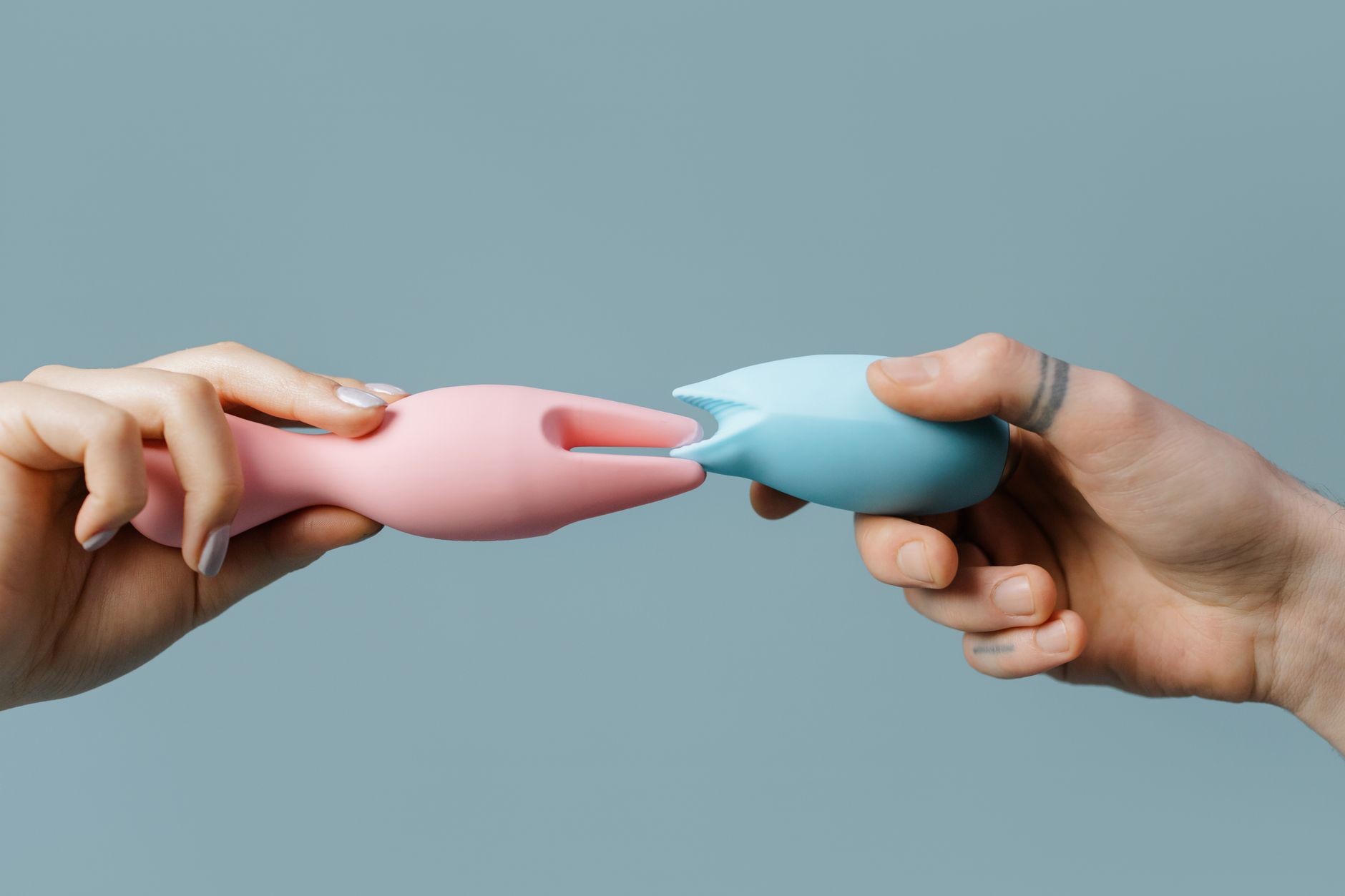
Photo by cottonbro studio on Pexels
How to actually use a lemon vibrator when orgasms feel far away
Start on the lowest setting. I mean this seriously. If you're used to full-power intensity, backing off feels counterintuitive. But when your nervous system has gotten habituated to standard stimulation, lower intensity with a different sensation pattern is more likely to wake it up.
Position the suction cup so it gently covers your clitoris. You don't need pressure here. The seal matters more than the force. Spend the first few minutes just feeling how this type of stimulation moves through your body. Notice where you feel it. Most people feel it higher, more diffuse, less sharply localized than they expect.
Move through the pattern settings slowly. Most lemon vibrators have 5-10 different patterns. Instead of jumping to the one that feels best, try patterns 1 through 4 and stay with each one for 2-3 minutes. This forces your attention onto subtle variation instead of chasing intensity. That shift in focus is where pleasure rebuilds.
If you're with a partner, let them know what you're exploring. "I'm trying something that works slowly" is honest and takes pressure off both of you. Some people find it incredibly hot to watch. Others do better with privacy for the first few sessions so they can focus entirely on sensation without performing.
When nothing feels like enough
If you've tried these techniques and orgasms still feel out of reach, a few other factors are worth examining.
Certain medications genuinely blunt sensation and arousal response. Antidepressants, blood pressure medications, and some antihistamines are common culprits. This isn't something to stop taking without talking to your doctor, but it is worth discussing with them. Sometimes adjusting dose, timing, or medication class can help. Sometimes it doesn't. Both outcomes are real possibilities.
Hormonal birth control can flatten libido for some people. The hormonal IUD affects fewer people this way than combination pills, but if you started birth control around the time pleasure started feeling difficult, that's worth exploring with your gynecologist.
Pelvic floor tension that's too tight or too loose disrupts sensation. Many people assume a strong pelvic floor is always better. Actually, if your pelvic floor is gripping constantly, it interferes with the relaxation that orgasm requires. A pelvic floor physical therapist can assess this in a single session. The treatment is usually simple and makes an enormous difference.
When it's relationship friction disguised as a sensation problem
Here's something I see constantly: people describe "can't orgasm" when what's actually happening is "don't want to be intimate right now, and my body knows it."
If orgasms disappeared around the same time your relationship shifted, this is worth examining with your partner or a therapist. A lemon vibrator can help you reconnect with solo pleasure while you work on the relational stuff separately. Sometimes those two conversations need to happen in parallel.
The patience piece
When you've been disconnected from your pleasure for months, reconnecting typically takes weeks, not days. This is normal. Your nervous system needs time to trust that pleasure is actually on the menu again.
Most people I work with see a shift within 3-4 weeks of consistent practice. Not every session leads to orgasm. But sensation becomes more vivid. Interest returns. Your body remembers that this matters.
A lemon clitoral vibrator accelerates that return because it breaks the pattern loop. Novel sensation is the fastest route back to arousal when arousal has gotten stuck.
Common questions
What if I've used vibrators for years and nothing feels new anymore?
This is where suction-based stimulation becomes genuinely game-changing. If you've relied on standard vibration for a decade, suction creates a sensation your nervous system hasn't habituated to yet. Your body isn't less responsive. It's just gotten used to one specific input pattern. Different input pattern equals neural novelty equals arousal returning.
Can I use a lemon vibrator with a partner?
Completely. Some couples find it incredibly connecting to explore new types of stimulation together. Others do better if one partner uses it solo while the other partner is present but not directly involved. There's no wrong way. The key is talking about it beforehand so there are no surprises.
How long should a session be if I'm trying to rebuild arousal?
Start with 20-30 minutes with zero goal of orgasm. Seriously. The moment you're chasing the outcome, your nervous system tightens. Give yourself permission for 20 minutes of pure sensation exploration. After a few weeks of that, you can extend sessions or shift the intention if you want to. But the foundation is always "I'm exploring sensation," not "I need this to lead somewhere."
What if I still can't orgasm after several weeks?
Talk to a therapist or sex coach. Sometimes the barrier is deeper. Sometimes it's physiological and needs medical input. Sometimes it's relational. None of that means you're broken. It means you need a different kind of support than a device alone can offer.
Does a lemon vibrator work for people with reduced sensation?
Often, yes. Because suction engages different nerve pathways than vibration, many people with numbness or reduced sensitivity feel suction-based stimulation more clearly than traditional vibration. That said, if your reduced sensation is medication-related or from nerve damage, that's worth discussing with your doctor alongside device exploration.
Is it normal for pleasure to take this long to rebuild?
Yes. Your nervous system isn't lazy or broken. It's learned over time that pleasure isn't a priority. Retraining that takes patience. Most people describe the process as returning to their body rather than discovering something new. That's exactly right.
You deserve to feel this again
Orgasms that feel distant aren't a permanent condition. They're a sign that something shifted, and shifts can be shifted back. A lemon vibrator is one specific tool that works particularly well for this particular problem because it offers novelty at the nervous system level. Add intention, patience, and permission, and you're rebuilding arousal from the ground up.
If you want more specific guidance on technique or if you're working through relational barriers alongside sensation challenges, reaching out for a consultation can help you figure out what you actually need. Sometimes it's a device. Sometimes it's conversation. Usually it's both.