
Here's what I hear in my office all the time
One partner wants to introduce a lemon clitoral vibrator. The other worries it means they're not enough, or that bringing a toy into the bedroom signals failure. Both people love each other. Neither person is wrong. They're just speaking different languages about the same fear.
The truth is messier than either story. Couples who use lemon vibrators together aren't fixing a broken sex life or proving their love through toys. They're usually doing something braver: they're deciding that pleasure matters more than the story they've been told about what intimacy is supposed to look like.
Why couples actually introduce toys into their relationship
It's not because one person is unsatisfied. It's usually because someone (often the vulva-owning partner) has discovered that lemon vibrators work differently than the body does, and that's not a flaw in the relationship. It's biology.
Here's what I see consistently: a partner with a vulva reaches orgasm more reliably with suction-based stimulation than with penetration or manual contact alone. This isn't about the other person failing. It's about the clitoral nerve density and how sensation works in that body. A clitoral vibrator like the Lem isn't competition. It's information.
The second reason couples introduce toys is intimacy itself. If you're choosing to be vulnerable about what you actually need, and your partner is listening and willing to try, you're building something most couples don't have: radical honesty about desire.
The third reason is novelty and play. After years together, shared pleasure can feel rote. A lemon sucker or other new sensation creates permission to slow down, explore together, and stop performing.
The conversation that changes everything
Here's what doesn't work: dropping a lemon vibrator on the nightstand and hoping your partner gets the message. Also doesn't work: framing it as a need. ("I need this because you're not enough.") Also doesn't work: hiding your own pleasure and then wondering why the relationship feels flat.
What works is what I call the separation conversation. You address two things at once, but you address them separately.
First, the physical conversation: "My body responds to stimulation in specific ways. I've discovered that a clitoral vibrator helps me reach orgasm faster and more reliably. That's not about you or anything you're doing wrong. It's about anatomy." This is data, not critique.
Second, the relational conversation: "I love our sex life together. I also think introducing something new could be fun for both of us. I'd like to try it together." This is an invitation, not a demand.
The gap between these two statements matters. The first removes shame. The second opens the door to shared pleasure. Most couples who stumble do it because they collapse both conversations into one, and suddenly it sounds like "You're not enough and I want a toy."
What to expect when your partner introduces a lemon vibrator
Many partners worry they'll feel replaced or less important. Here's what actually happens when you use a lemon clitoral vibrator together: your partner experiences more intense sensation, faster arousal, and more reliable orgasms. That means more pleasure in the room, and yes, more pleasure for you too.
If you're the partner with the vibrator: you might feel vulnerable at first. Allowing someone to watch you use a toy, or to use it together, means they're seeing your pleasure unmade and remade. That's exposure. But it's also invitation.
The physical experience changes. Suction-based clitoral vibrators work differently than friction or traditional vibration. If you haven't tried a lemon vibrator before, the sensation is less intense in the way of direct contact and more encompassing. Your partner sees this happening and understands it differently than you imagined.
They usually realize: this isn't about them at all. It's about pleasure, and pleasure is always good.
The practical setup that works
Three things change how smoothly this goes:
Start with curiosity, not performance. Use the lemon vibrator on your own first. Know how often you want to use it, what the sensation feels like, what patterns work. Then introduce it to your partner without the pressure of it needing to be "sexy" or perfect. It's awkward at first. That's normal.
Let your partner hold it, or guide it, or just watch. The power dynamic shifts when your partner is in control of the toy. Some couples find this creates a different kind of connection. Others don't. Experiment with who's holding the tool and what that feels like in your body and the room.
Talk about what you're learning. "That pattern feels incredible." "I like when you slow down." "Can we try combining this with...?" The conversation during and after is more important than the toy itself. It's where the real intimacy lives.
When a partner resists (and what to do about it)
If your partner says no, that's legitimate. Respect it. But understand the difference between "I'm not interested" and "I'm scared."
Scared sounds like: "I don't think I'm enough for you" or "It feels like cheating" or "I'm embarrassed." If it's fear, there's something to work with. The conversation isn't about the toy. It's about what the toy represents to them.
Not interested sounds like: "It's just not my thing" or "I'm happy with how things are." If that's genuine, you have choices. You can use a lemon vibrator solo and share that experience separately. You can explore whether your partner might feel differently later. You can decide this is important enough to revisit in six months. Or you can accept that this relationship has a boundary here, and that's okay.
What you can't do is pretend you don't want something and expect that to feel fine forever. Resentment builds. Conversations that start here, early, prevent that.
The deeper thing that happens
Most couples I work with who introduce a lemon vibrator discover that the toy wasn't the point. The point was permission. Permission to say what you want. Permission to explore. Permission to prioritize pleasure as part of intimacy instead of a side effect of it.
After six months or a year of using a clitoral vibrator together, I usually hear: "We talk differently now." "Sex feels less like something we perform and more like something we do together." "I know my partner's body better."
That's not about the toy. That's about what the toy opened up.
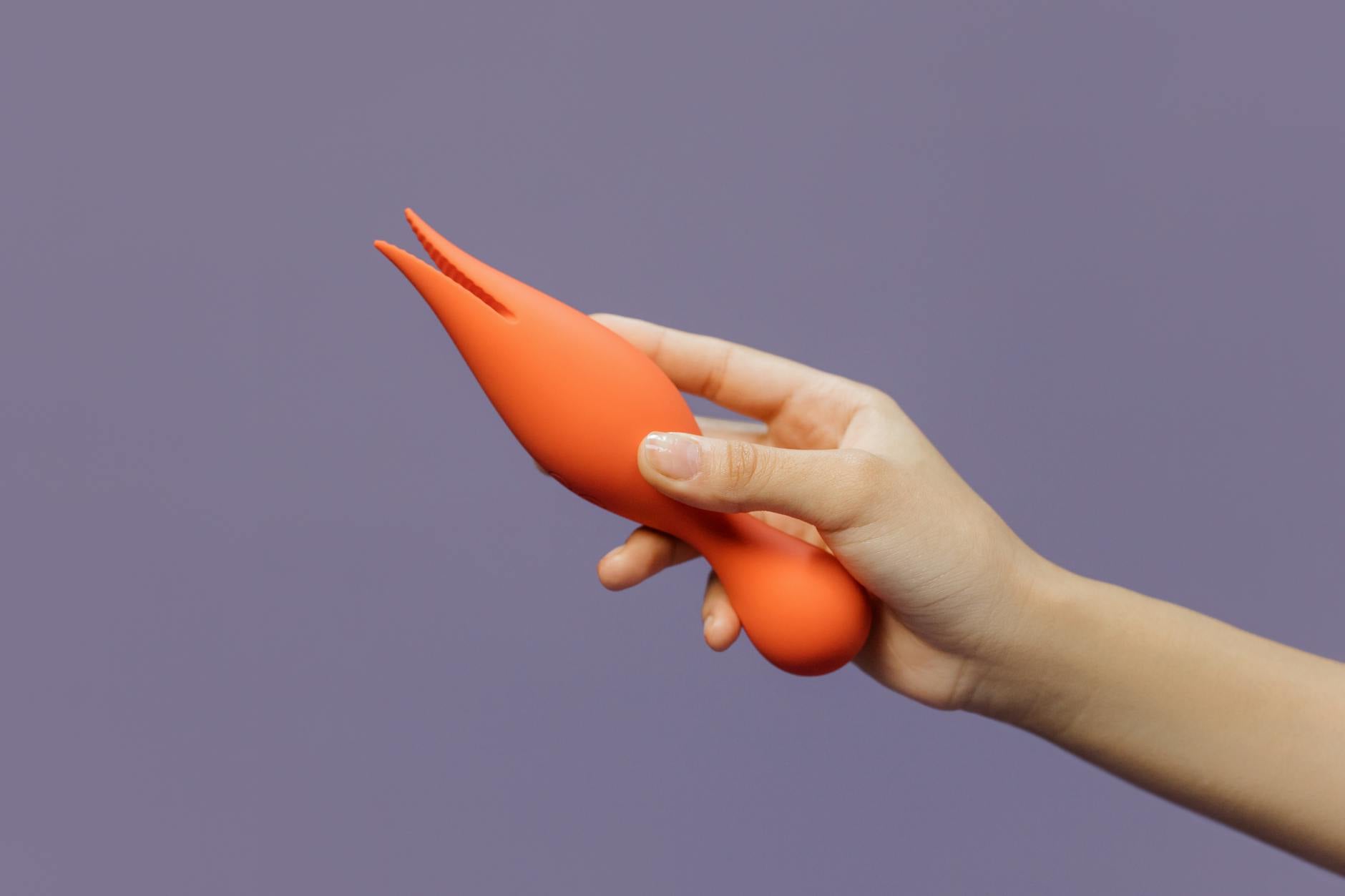
Photo by cottonbro studio on Pexels
FAQ: What couples actually want to know
Should I be worried if my partner wants to use a lemon vibrator?
Not worried. Curious. Ask why. Listen without defending. If they say "I want to explore my own pleasure," that's healthy. If they say "You're not giving me what I need," listen to what that means. It might be physical (relief that you can't provide alone is actually about teamwork, not failure). It might be emotional (they need to feel seen in their desire). Address the actual need, not the toy.
Is using a lemon clitoral vibrator together cheating?
No. Cheating involves deception or breaking agreements. If you're choosing this together, it's intimacy. If one partner is doing it secretly, that's deception. The toy isn't the issue. The hiding is.
How often should couples use a lemon vibrator?
There's no magic number. Some couples use it every time they're intimate. Others use it once a week or a few times a month. Some use it sporadically when they want something different. What matters is that you've talked about it and you both feel good about the rhythm.
What if I'm embarrassed to use a lemon vibrator in front of my partner?
That's normal. Embarrassment usually fades after the first or second time. Start slow. You don't have to perform. You're learning together. The awkwardness is temporary. The intimacy that comes from being seen in your own pleasure lasts.
Can a lemon vibrator improve our sex life if it's already struggling?
A toy can't fix relational problems. If you're not talking, if there's resentment, if you're disconnected emotionally, a vibrator won't change that. But if the foundation is solid and you just want more pleasure, deeper exploration, or permission to slow down together, yes. A tool like the Lem can open doors. Just make sure the communication is there first.
How do I know if my partner will be open to this?
Ask. Directly. "I've been thinking about exploring pleasure together in a new way. Would you be open to trying a clitoral vibrator with me?" You can't know until you ask. And asking is often the most intimate part of the whole thing.
What comes next
Introducing a lemon vibrator into your relationship isn't about fixing or improving anything. It's about deciding that your pleasure, and the pleasure you share together, matters enough to have an honest conversation about it. That conversation is the real intimacy. The toy is just the permission slip.
If you're ready to have that conversation with your partner, or if you want to explore what works for your own body first, that's where to start. Honesty before innovation. Curiosity before judgment. Your pleasure deserves both.