
The intensity mismatch nobody talks about
You buy a lemon clitoral vibrator. The reviews look stellar. You get home, turn it on, and it's either aggressively overwhelming or underwhelming compared to what you expected. Neither of these outcomes is a reflection on you. It's a reflection of not matching the device to how your body actually responds.
The truth is that sensitivity is not binary. It lives on a spectrum, and it changes. Your nervous system's response to stimulation depends on arousal level, stress, hormones, medication, and even the time of day. A lemon vibrator that feels perfect at 8 p.m. on Saturday might feel too intense on a Tuesday morning. Understanding this variability is the first step to choosing something that works.
What intensity actually means
When we talk about vibrator intensity, we're talking about the strength of the vibrations measured in vibrations per second (Hz) or amplitude (how far the motor moves back and forth). But here's the thing: intensity isn't just a number. It's the interaction between the motor's power and the surface area of contact.
A lemon suction vibrator like the Hello Nancy Lem works differently than a traditional vibrator because it uses air-pulse suction instead of pure vibration. This changes how intensity translates to sensation. The Lem's gentlest setting can feel stronger than a traditional vibrator's mid-range because suction stimulates the entire clitoral network, not just the surface.
That's why some people who swear they're "not very sensitive" find the Lem revelatory. It's not that they're more sensitive than they thought. It's that the technology bypasses the friction-based stimulation they've found overwhelming.
How to identify your sensitivity category
Think about your past experience with vibrators or stimulation. You fall into one of four rough camps.
High sensitivity. You feel everything intensely. You prefer lighter touch, indirect stimulation, or longer warm-up time. Traditional vibrators on their lowest setting can still feel too buzzy. You might prefer the sensation of hands or lips over a device.
Moderate-to-high sensitivity. You enjoy sensation but need it ramped up gradually. You like having 2-3 intensity levels to work with. You prefer patterns to constant vibration. You can tolerate direct stimulation but not for extended periods without needing a break.
Moderate sensitivity. The goldilocks zone. You're happy across a range of intensities. You might want variety within a session. You're comfortable with direct stimulation and like having 5+ speed options.
Lower sensitivity. You need more oomph to feel it. You might prefer consistent, stronger stimulation. You're less bothered by direct contact or repetitive patterns. You're comfortable exploring higher intensity levels.
Your category isn't fixed. Arousal level, stress, and even what you've used recently all shift where you land. The goal isn't to lock yourself into a box but to know your baseline and understand what adjustments help.
Patterns versus constant vibration
Here's something that catches people off guard: patterns often feel less intense than constant vibration at the same speed, even though they're technically more variable. Why? Your nervous system habituates to steady input. A constant buzz becomes white noise. A changing pattern keeps your nerve endings engaged.
If traditional constant vibration has felt numbing or overwhelming, switching to a patterned lemon clitoral vibrator often changes the game. The pattern gives your body something to follow rather than something to push against.
For people with high sensitivity, patterns are usually more comfortable than constant buzz. For people who want to build toward orgasm faster, constant vibration at a moderate-to-high intensity often works better. But this isn't universal. Some people find patterns more distracting than helpful.
The only way to know is to experiment. If you're trying a lemon vibrator for the first time and you have high sensitivity, start with the gentlest patterned setting. Spend 2-3 minutes there. Let your body acclimate. Then decide if you want to stay or move up.
Suction versus traditional vibration: the sensitivity difference
Suction-based clitoral vibrators work on nerve-dense tissue without the direct friction of a traditional motor. This fundamentally changes how intensity feels.
If you've found traditional vibrators overwhelming, a suction vibrator might feel gentler even at higher settings because the stimulation is distributed across the whole clitoral complex rather than concentrated on one spot. You're getting more sensation but in a way that doesn't feel as buzzy or intense.
Conversely, if you've wanted more sensation from a traditional vibrator but found suction toys too soft, you might need something with higher motor power or a firmer contact surface. A lemon vibrator is a great entry point, but understanding the difference between these technologies helps you choose.
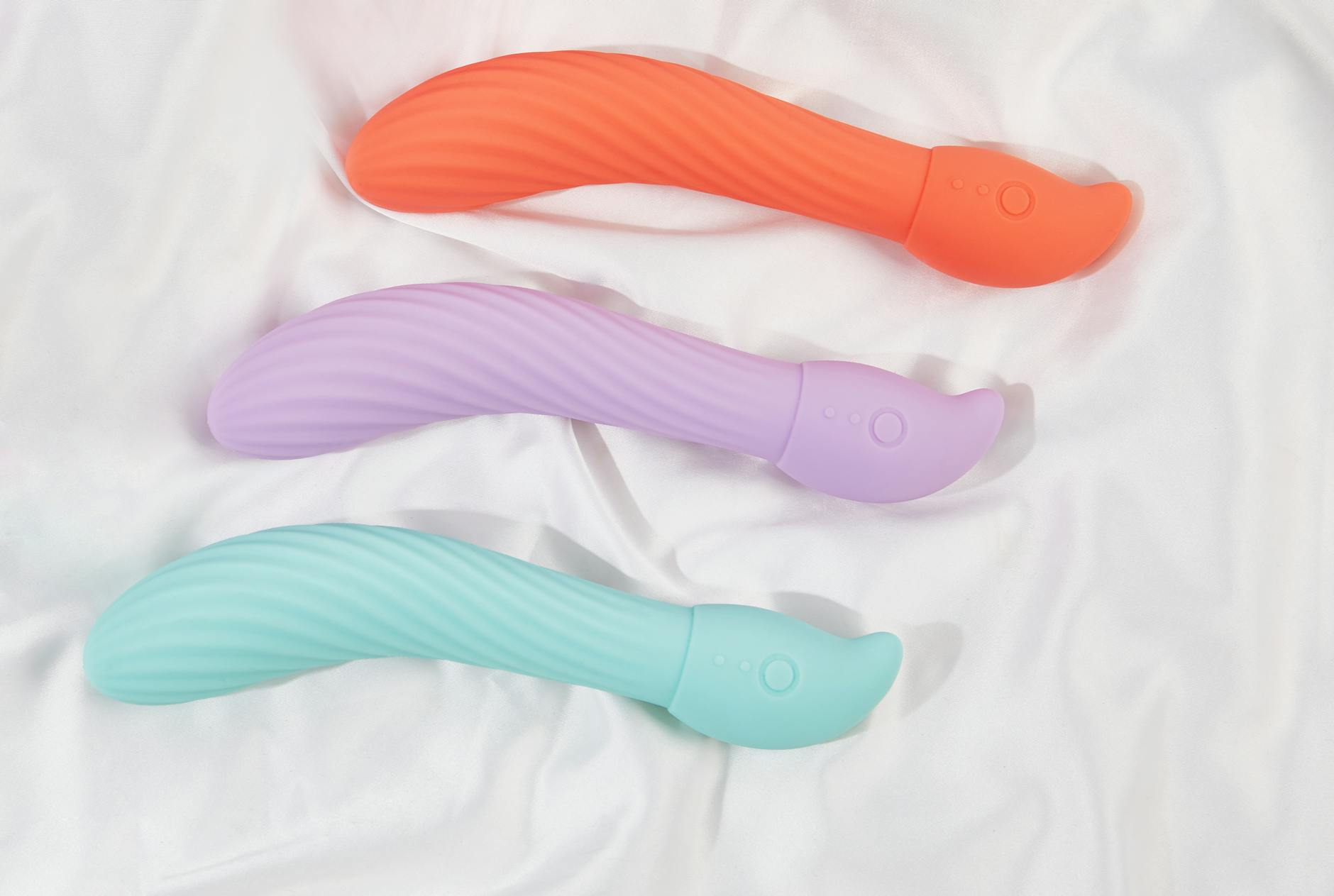
Photo by IFONNX Toys on Pexels
The warm-up principle
One of the most important discoveries I've made working with people exploring new tools is this: almost everything feels intense if you're not aroused. Arousal is the electrical grid that makes sensation pleasurable instead of jarring.
If you buy a lemon clitoral vibrator and the lowest setting feels harsh, the device probably isn't wrong. You probably need longer warm-up time. Spend 5-10 minutes on manual stimulation, sensual touch, or mental focus before introducing the vibrator. Let your body prepare.
I recommend this to everyone, but especially to people with higher sensitivity or anyone returning to pleasure after a gap. The device works best when your nervous system is already primed. Start at the gentlest setting and increase only if you want more, not because you feel like you should.
Medication and sensitivity shifts
This is something rarely discussed in vibrator guides but critically important: many medications affect sexual response. SSRIs (antidepressants), antihistamines, blood pressure meds, and hormonal birth control can all change how intense sensation feels or how easily you can orgasm.
If you've used a lemon vibrator before and suddenly it feels different, or you're starting with one for the first time while on medication, this might be why. You're not broken. Your nervous system's baseline has shifted. You might need a gentler device, longer warm-up time, or a different type of stimulation altogether.
Talk to your doctor if you're concerned. But also: give yourself permission to explore without judgment. The "right" intensity for you today might not be the right intensity for you in six months. Flexibility beats loyalty to a specific device or setting.
How to actually test before you commit
If possible, read reviews from people describing their sensitivity level in detail, not just "great product" or "didn't work for me." Look for reviewers who describe their baseline ("I usually find vibrators too intense") and then explain how this device felt. That's gold.
If you're ordering blind, start with the gentlest setting you can access. Spend at least 2-3 sessions there before moving up. Your body needs time to calibrate. What feels overwhelming in session one often feels perfect by session three because your nerve endings have acclimated.
Consider asking a partner for feedback if you're exploring together. Sometimes an outside perspective on what you're experiencing ("that pattern seems to work better for you") helps you identify patterns you might miss alone.
Finding your sweet spot across your cycle
If you menstruate, your sensitivity changes across your cycle. During the follicular phase (after your period, before ovulation), your estrogen is rising and many people feel more sensation and orgasm more easily. During the luteal phase (after ovulation), sensation often dulls and arousal takes longer to build.
This doesn't mean your device is wrong. It means that the "right" intensity or pattern for you might shift week to week. Some people keep their lemon vibrator on a lower setting during the luteal phase and crank it up during the follicular phase. Others swap devices entirely.
Tracking what works when gives you permission to adjust without feeling like you're doing something wrong. Your body isn't failing. It's responding to biology.
Exploring sensitivity together with a partner
If you're using a lemon vibrator with a partner, communication about intensity becomes part of your intimate language. You don't need clinical feedback. Just check in: "That feels good" or "Can you turn it down" or "Let's try the third pattern." That's enough.
Many partners feel unsure about whether they're using a device "correctly" on someone else. The answer is simple: follow feedback. If your partner says the intensity feels right, it is. If it doesn't, adjust. No vibrator has a moral correct setting.
For deeper context on navigating this conversation, see our guide on why couples use lemon vibrators together.
The reframe: sensitivity is power, not a limitation
High sensitivity often gets positioned as a problem to overcome. But it's not. It's information. People with higher sensitivity often experience more intense, more frequent orgasms once they find the right conditions. They're not broken. They're tuned differently.
The same is true for lower sensitivity. You might need more input to reach climax, but that doesn't mean your capacity for pleasure is smaller. It's just different. Some people with lower sensitivity describe their orgasms as longer-building and more full-body compared to faster, more localized peaks.
There's no hierarchy. There's just variation. And that variation is why a tool like a lemon suction vibrator works so well: because it meets people across the entire sensitivity spectrum. The key is matching the device, the intensity, and the patterns to where you actually live on that spectrum, not where you think you should.
Frequently asked questions
What intensity should a first-time lemon vibrator user start with?
Start with the gentlest intensity and the simplest pattern your device offers. Give yourself 2-3 sessions at that level before moving up. Most people find they can increase intensity after their body adjusts. If you're highly sensitive, you might stay at lower settings permanently, and that's perfectly normal.
Can your sensitivity to vibrators change over time?
Absolutely. Arousal level, stress, hormones, medication, and age all shift your sensitivity baseline. A device that felt perfect five years ago might feel too intense now, or vice versa. Your body isn't failing. It's evolving. Revisit intensity levels periodically and adjust without shame.
Why does suction feel different from traditional vibration?
Suction stimulates the entire clitoral complex using air-pulse technology rather than focused vibration. This distributes sensation more broadly across nerve-dense tissue. For many people, suction feels gentler and more expansive than traditional buzzing, even at higher settings.
How do I know if I need a stronger or weaker vibrator?
If you're consistently finishing sessions unsatisfied or feeling like you need more, you might benefit from higher intensity. If you're frequently overwhelmed or numb after a few minutes, try lower intensity or patterned rather than constant vibration. But also check arousal level, warm-up time, and whether your nervous system needs a break before assuming the device is wrong.
Does using vibrators make you less sensitive over time?
This is a persistent myth. Regular vibrator use doesn't desensitize you. Your nerve endings don't "wear out." What can happen is that you stop noticing gentler sensations if you're always using high intensity. Solution: vary what you use, vary the intensity, and take breaks. Your sensitivity bounces back.
Can medication affect how a lemon vibrator feels?
Yes. SSRIs, antihistamines, blood pressure medications, and hormonal birth control can all change sexual response, including sensitivity and ease of orgasm. If you notice a sudden shift in how a device feels, medication changes might be the culprit. Talk to your doctor if you're concerned, but also give yourself grace as your body adjusts.
The takeaway
Choosing the right lemon vibrator intensity and pattern is less about finding the "correct" setting and more about understanding how your particular nervous system responds. Sensitivity exists on a spectrum. It changes. That's not a bug. It's a feature.
Start low, pay attention to what actually feels good (not what you think should feel good), and give yourself permission to adjust. Your body knows what it needs. The right lemon clitoral vibrator just makes it easier to listen.